Adventures on the Amazon
We cruised 1812.8 nautical miles from the Atlantic Ocean to Manaus on the Amazon River and back. Manaus the capital city of the Brazilian state of Amazonas, has a population of over 3 million people. It is home to the National Institute for Amazonian Research, so many tours concentrate on eco-tourism.
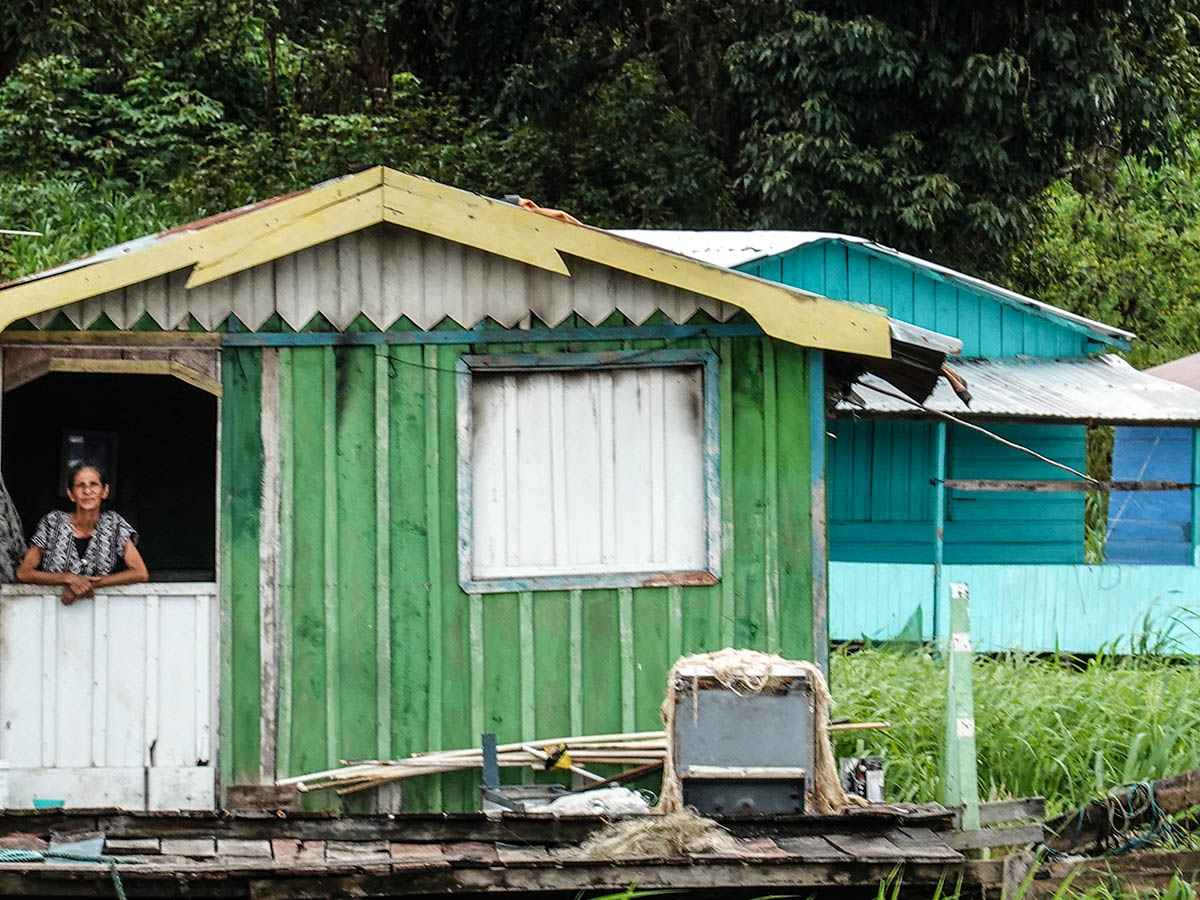
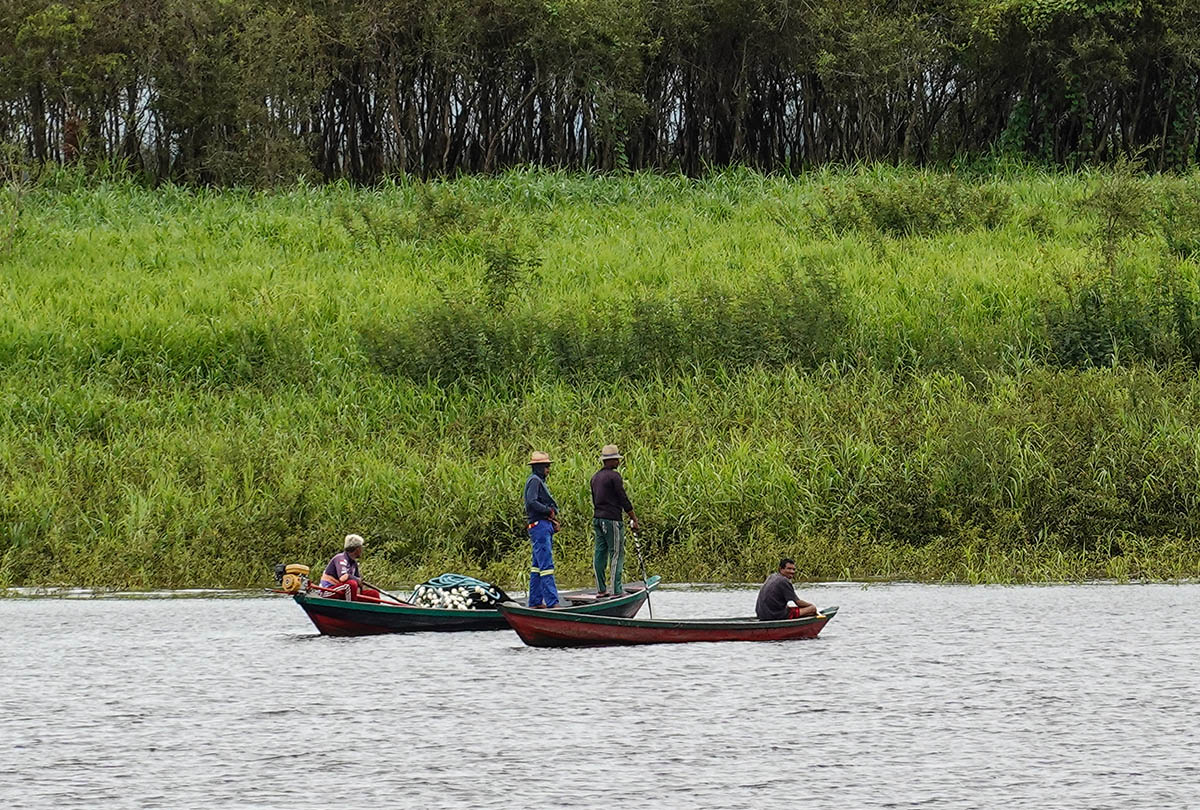
This past Fall the water levels were so low that it affected the shipping and cruise industry. The ribeirinhos (people who live along the river) had to leave their homes until the river levels increased. Our tour guides used the phrase “less trees, less rain” several times to emphasize the changes affecting the way of life on the Amazon River. These changes include a significant loss of animal life and fishing as well as changes to the soil. All of the above also affects tourism when cruise ships and tourist boats can not navigate the shallow waters of the Amazon.
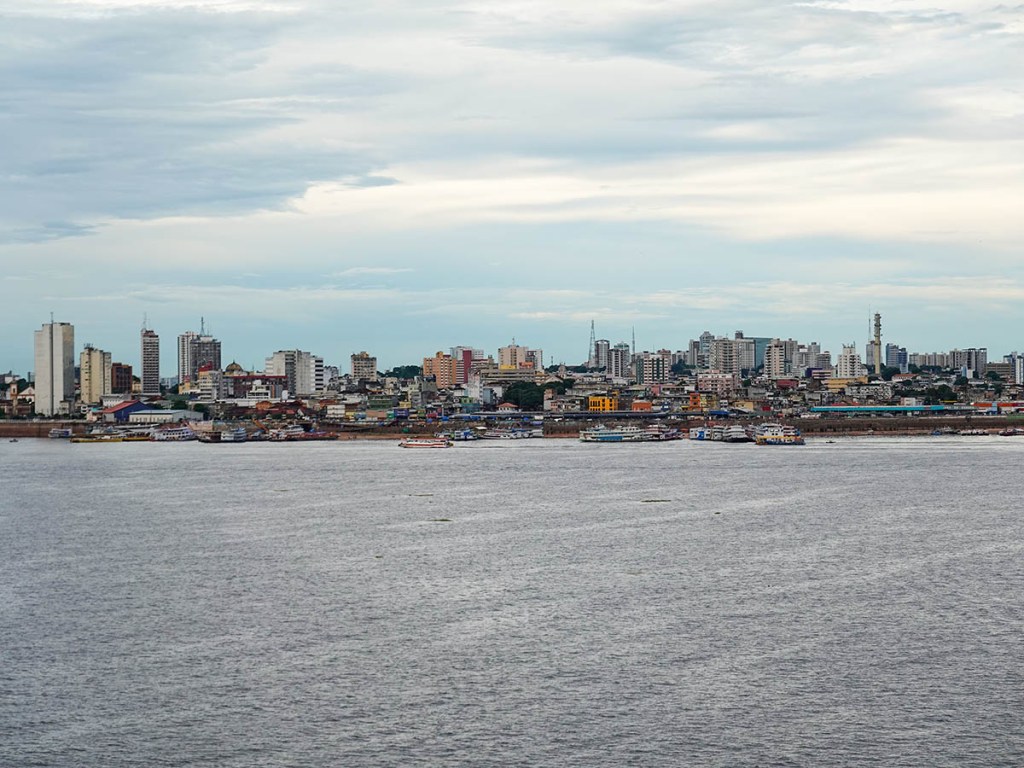
A view of Manaus as we were leaving. This prosperous city is a major shipping port and has an International Airport. It is also an economic hub for electronic and chemical manufacturing. We saw several refineries for the oil that is transported from Peru.
Ribeirinhos – Amazons River People
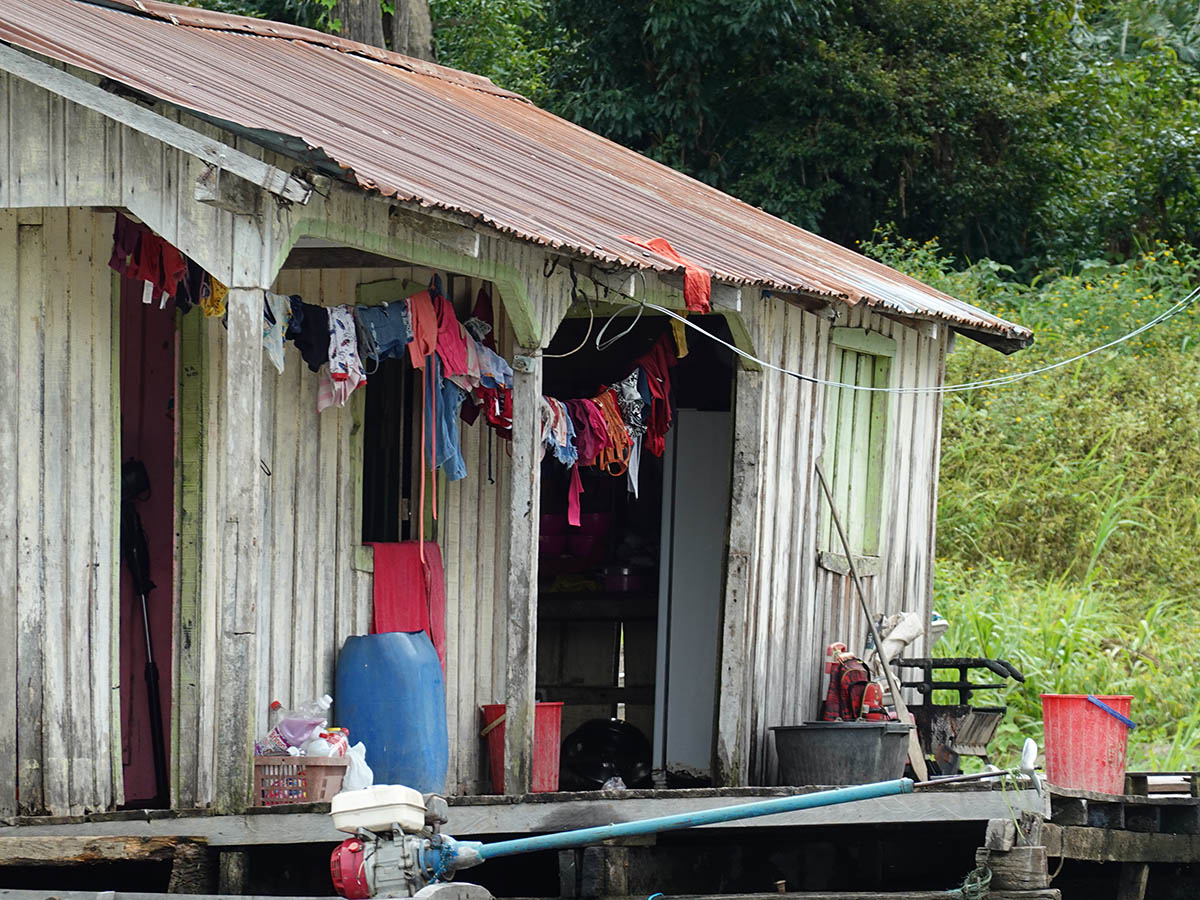
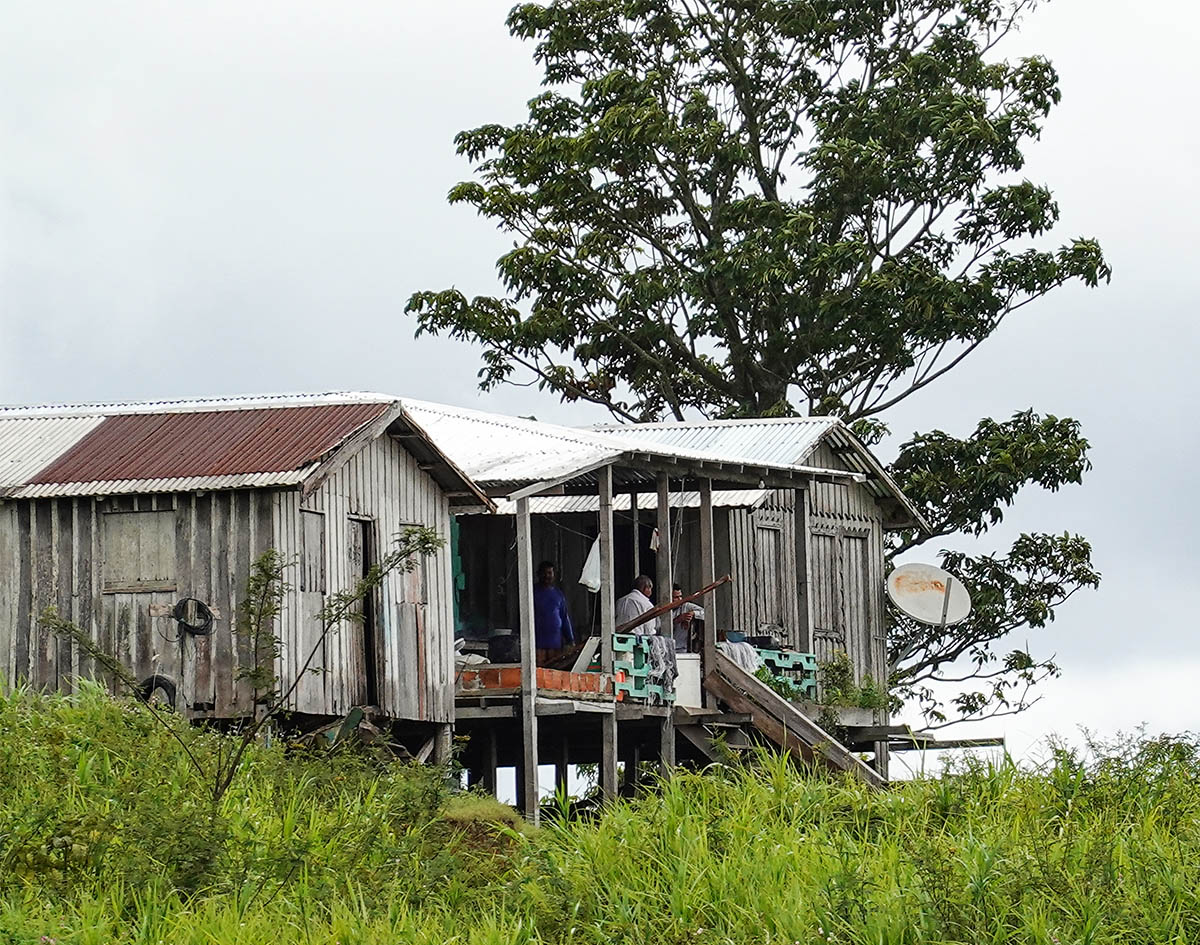
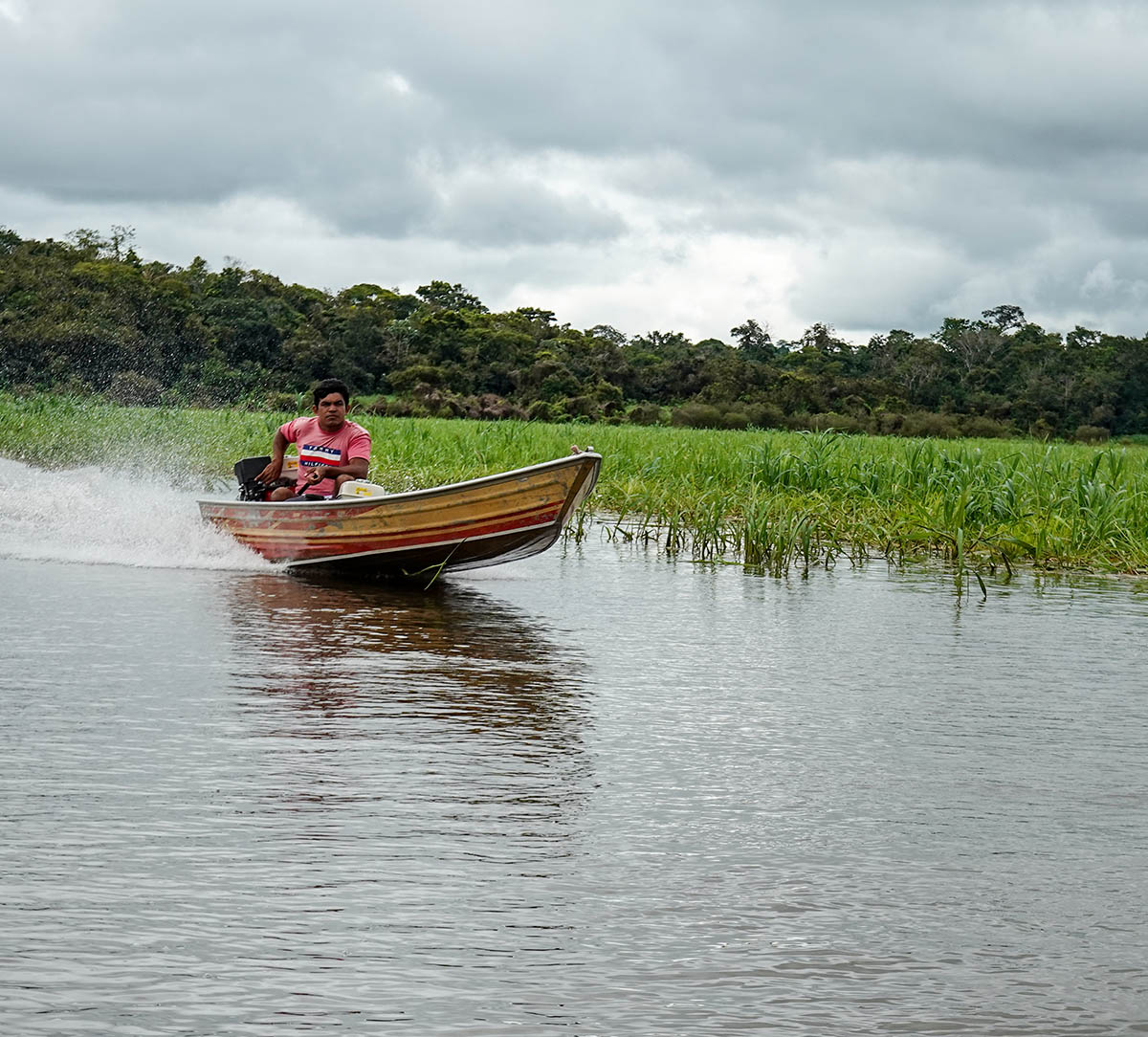
The villages we saw as we cruised on the Amazon were small groups of structures either along the banks or floating on the river. These villages have grocery stores and schools. The school buses are boats that transport the kids to the nearest local school. We also learned that the floating houses sit on top of logs often as many as 5 logs costing $2000.00 a piece.
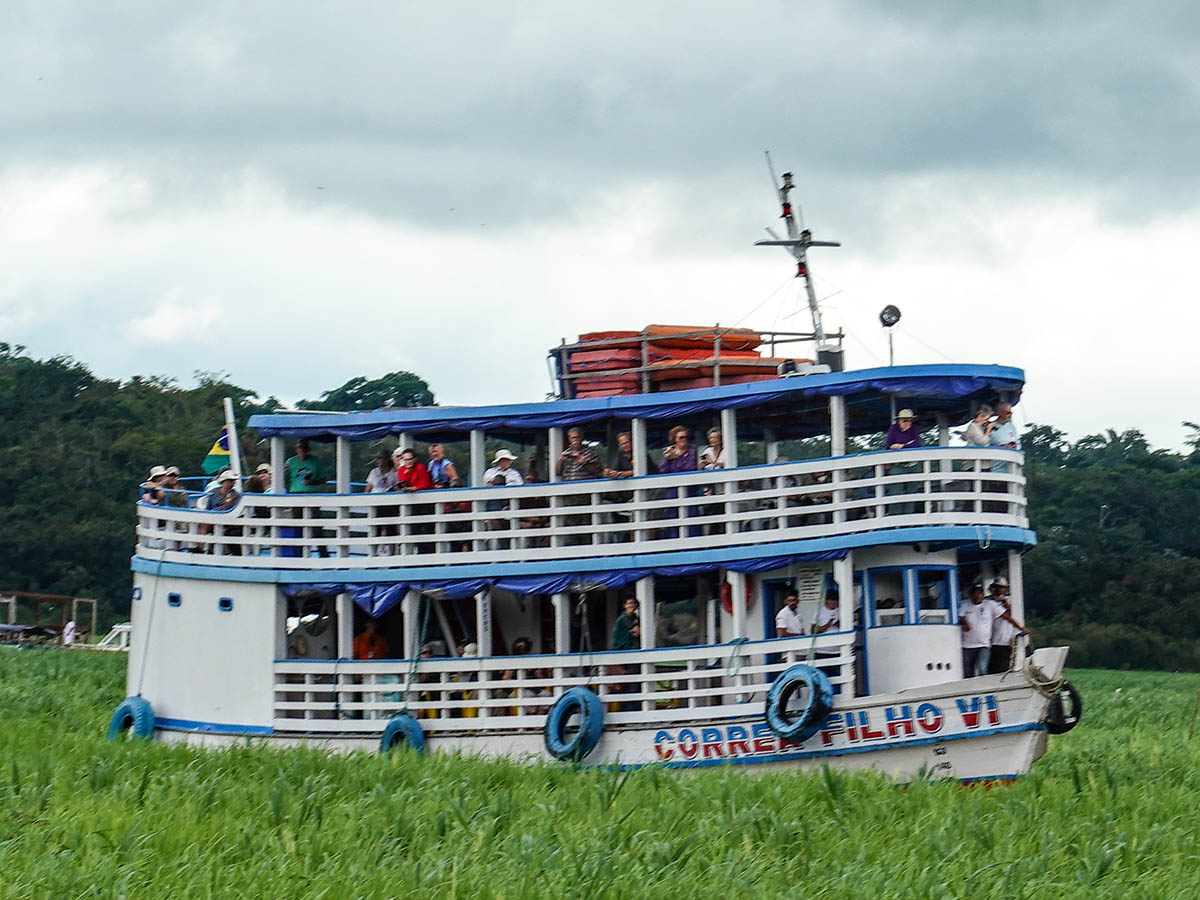
We took a tour of the waterways on small boats. In one of the pictures below see how low the tributary is as the grasses almost rose to the level of the first deck of the boat. You can also see a restaurant on the water. We also saw a lot of AC units and satellite dishes.
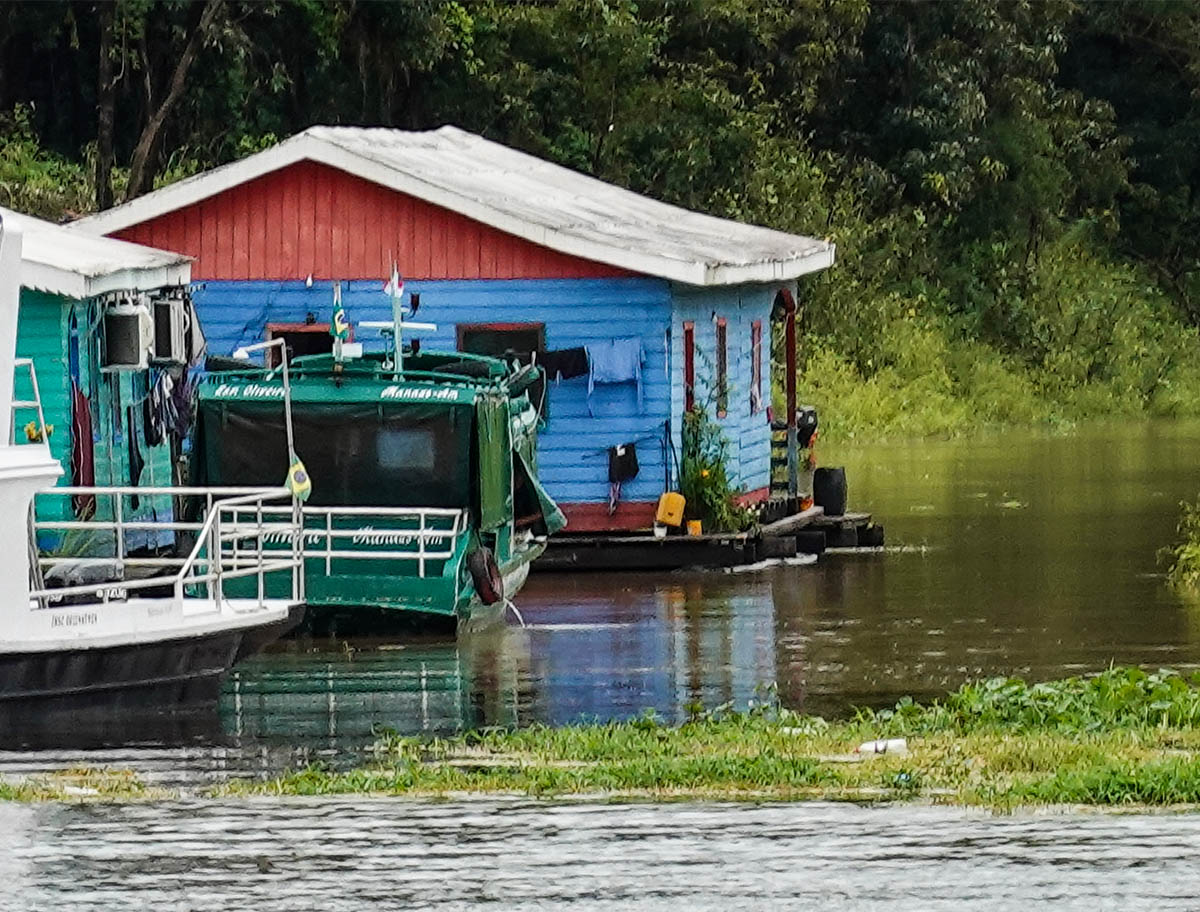
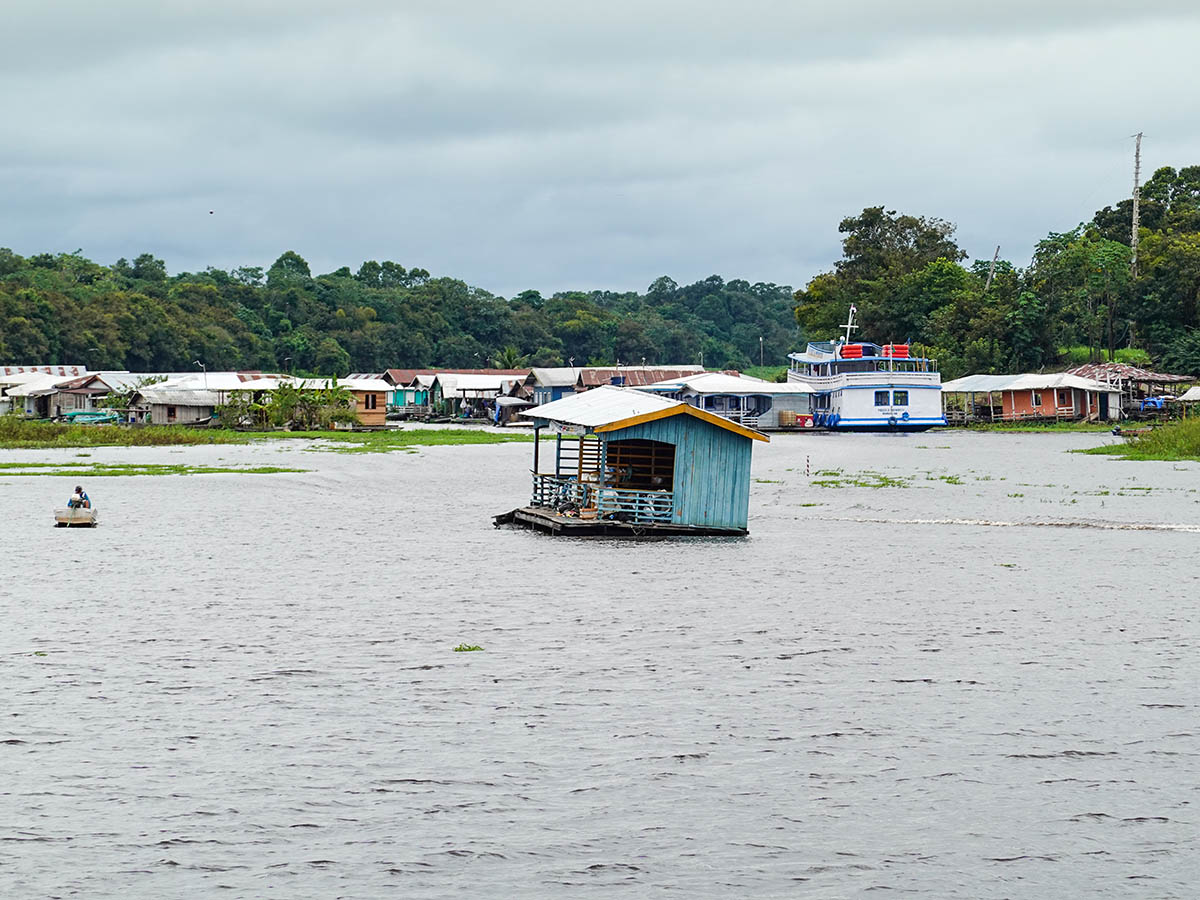



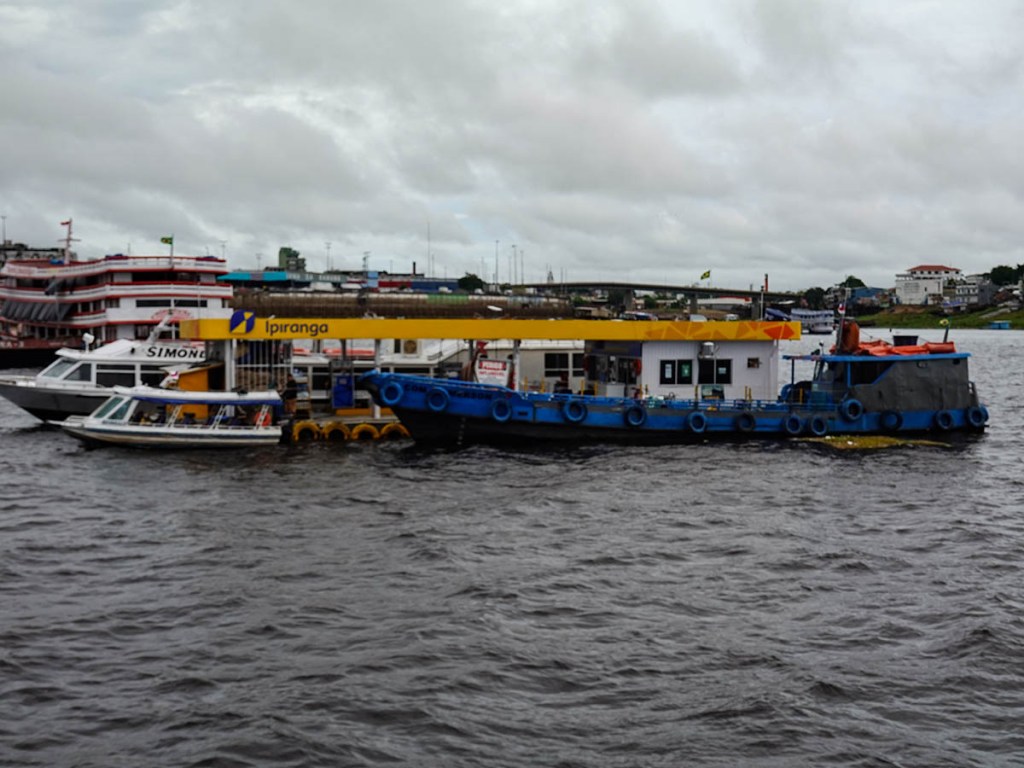
Here are 2 examples of floating gas stations. These serve not only to fuel the boats but also as mini-marts where basic food and supplies are available.
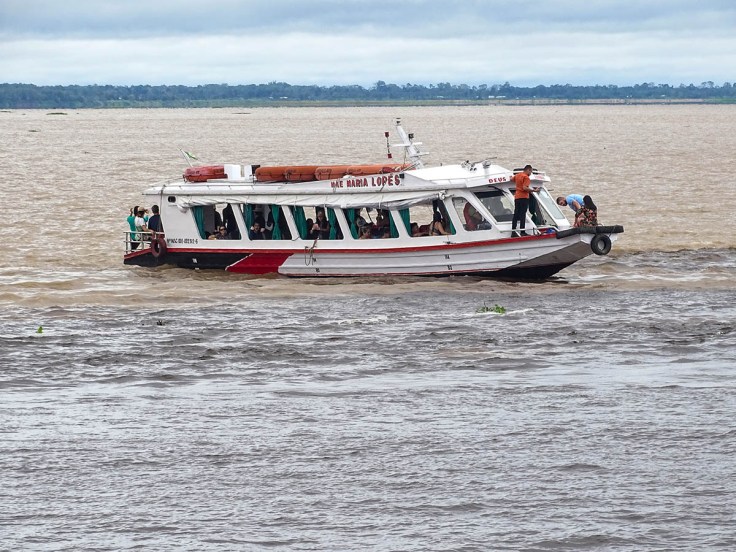
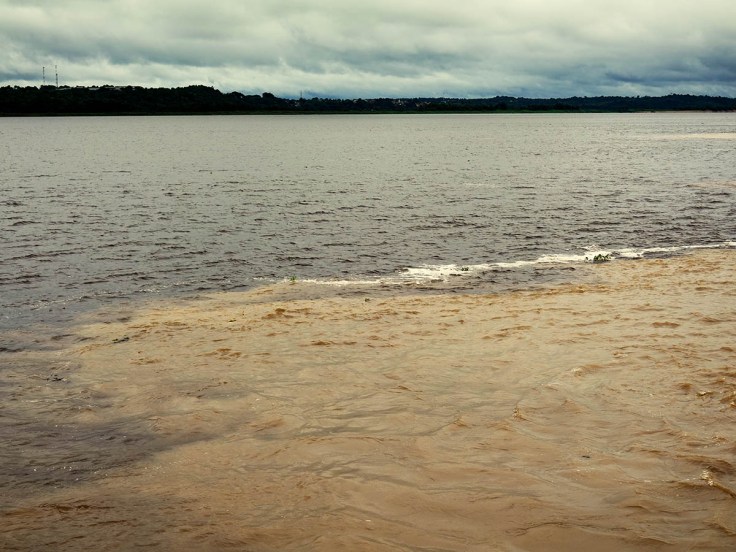
Below are photos of the meeting of the Amazon and Rio Negro rivers. Note the difference in the colors. These rivers flow side by side but do not mix. The Amazon is cooler and the current flows faster than the Rio Negro. The sandy color of the Amazon is from the runoff from the Andes. The Rio Negro is warmer and the current is much slower. The darker color of the Rio Negro is from plant matter.
 Two seniors traveling the world
So interesting! We stayed and toured only a small portion of the Amazon as part of an OAT trip. I found it fasinating, and your pictures and blog share so much more! Might be time to go back! Carry on, I’m so enjoying traveling along! Sharon Russell
LikeLike
Interesting read. I know very little about the area
LikeLike