Turning a Legend into a Festival: Boi Bumba
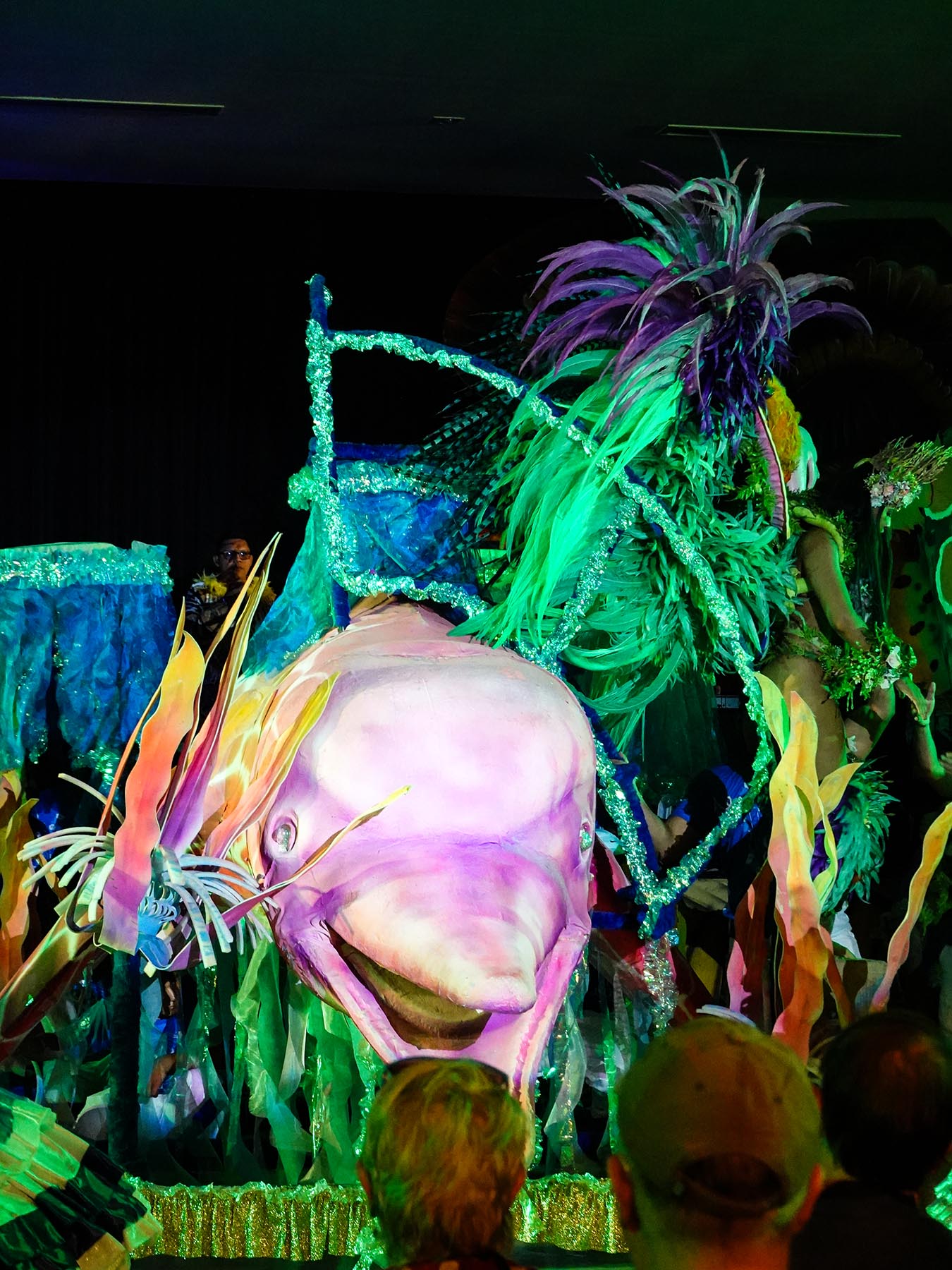
One of the things I enjoy about traveling is hearing the legends and tales from each region. Over time these legends tend to change a bit from generation to generation. I’m sure that is true when it comes to the “Legend of the Bull.” So what is the legend? It is the story of a very poor laborer who is trying to make his pregnant wife happy. She is craving bull’s tongue. Desperate, he goes in search of a bull. It just so happens that when he finds one, it’s a prize bull. He kills the bull and brings the tongue home to his wife. Happy, she satisfies her craving. In comes the bull’s owner demanding justice. The owner, a farmer, furious, demands justice. They call a doctor and a priest and together they are able to resurrect the bull. In the end, everyone is happy.
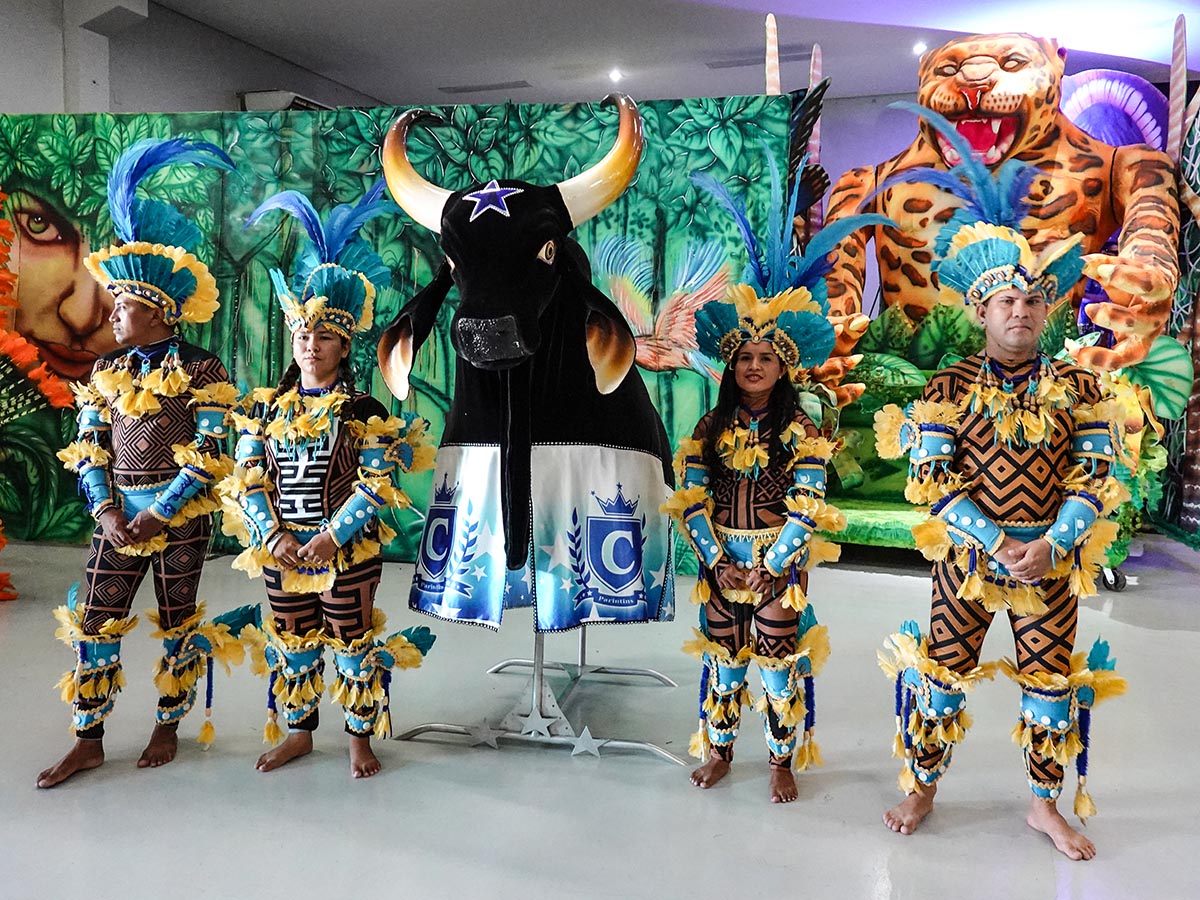
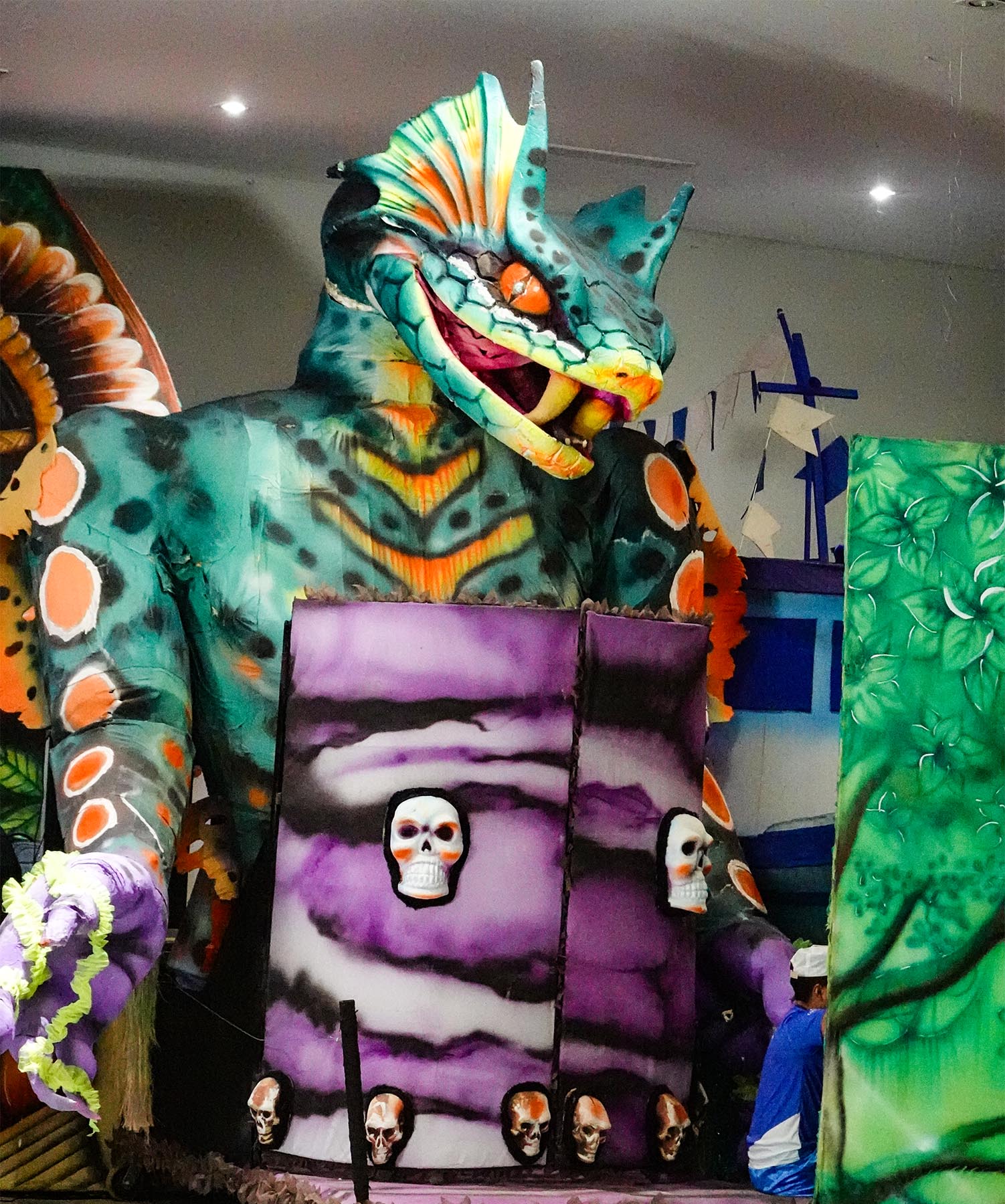
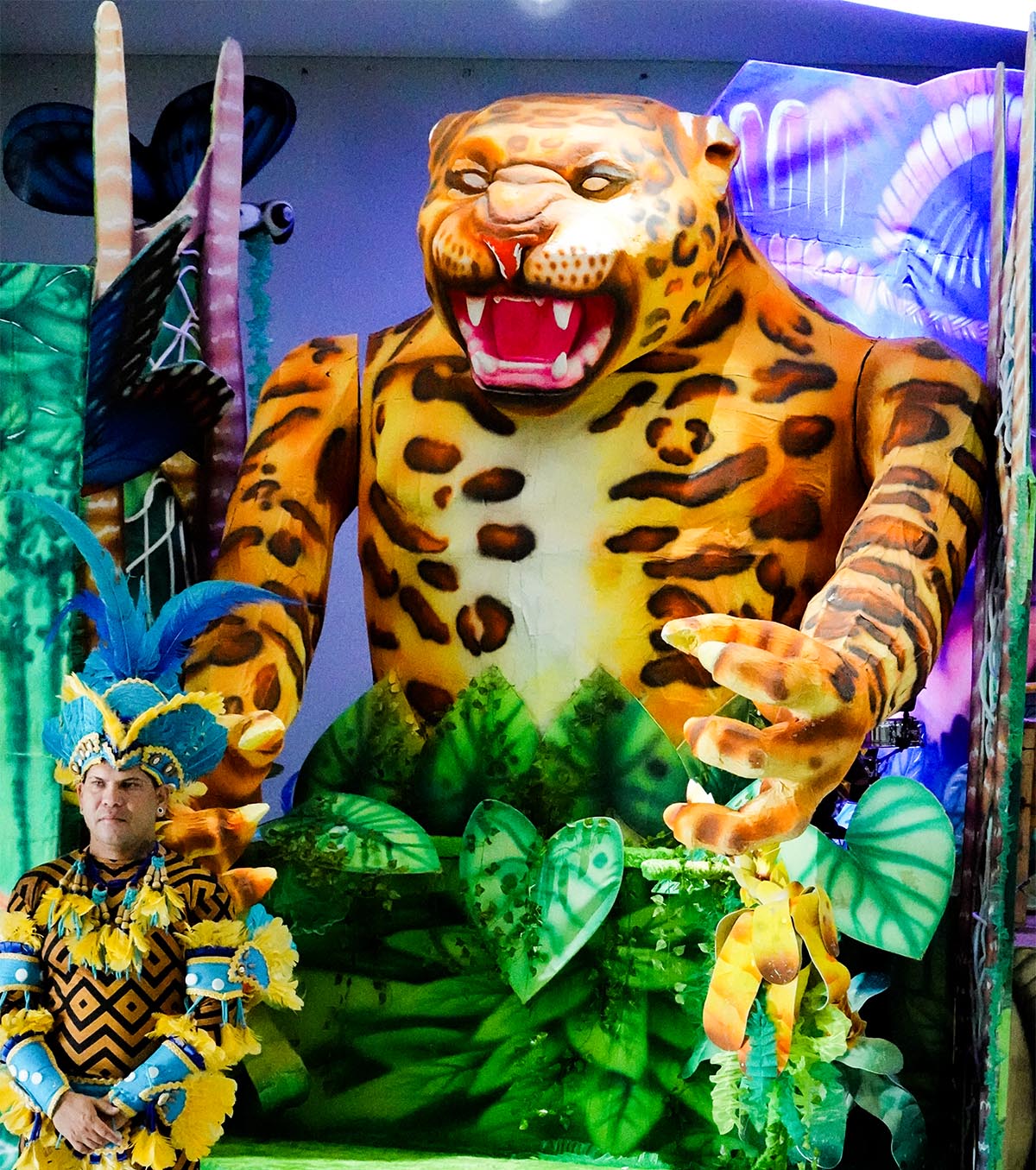
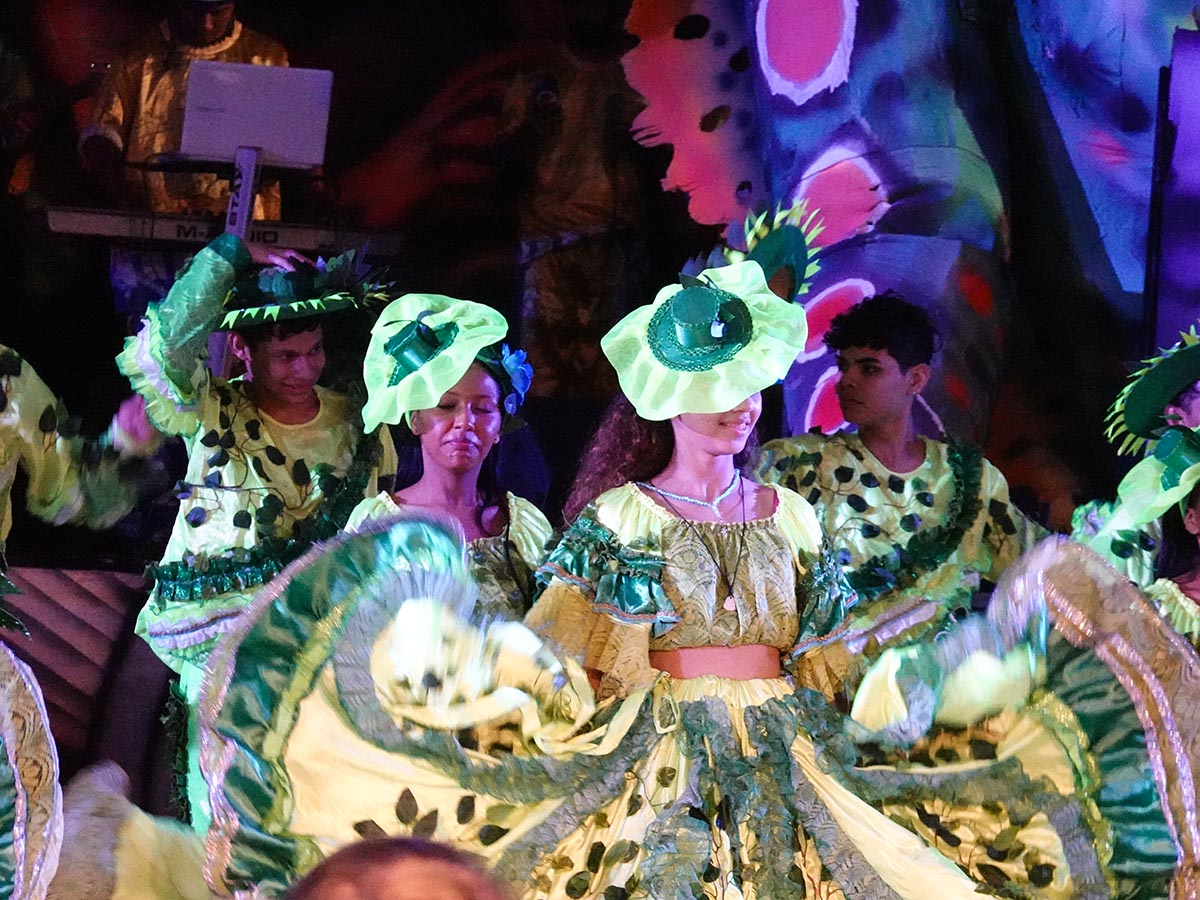
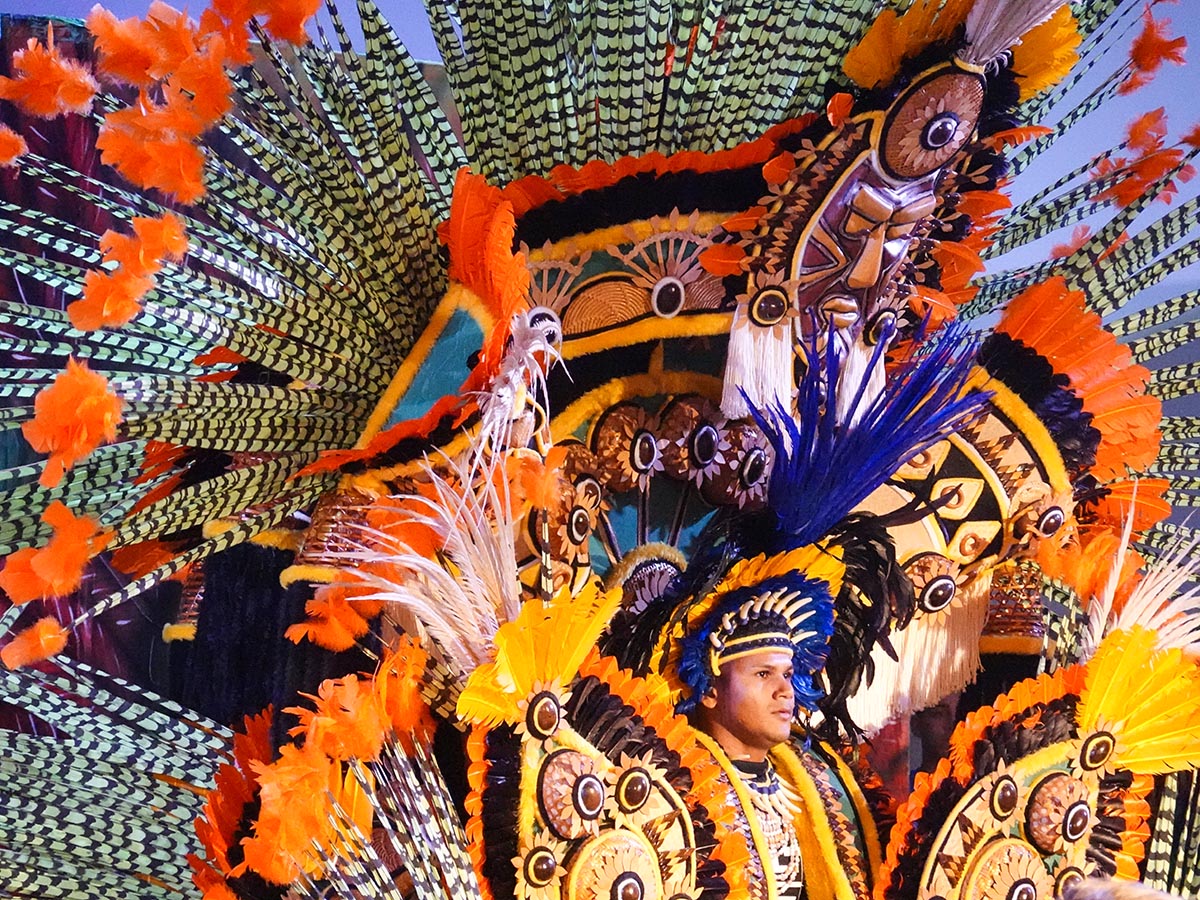
The legend remained as a local tale until the small town of Parintins decided to create an annual festival. For three days at the end of June, the ‘bumbodromo’ or flat stage comes alive. This stadium can hold 35,000 attendees. People come from all over the region often sleeping in hammocks because Parintins was unable to accommodate that many tourists. The festival remained local until around 1996 when a musical group, Carrapicho, had a hit song ” Tic Tic Tac – Bate forte o tambur”. Over time, the festival has incorporated not only local Amazonas folklore but also contemporary Brazilian music.
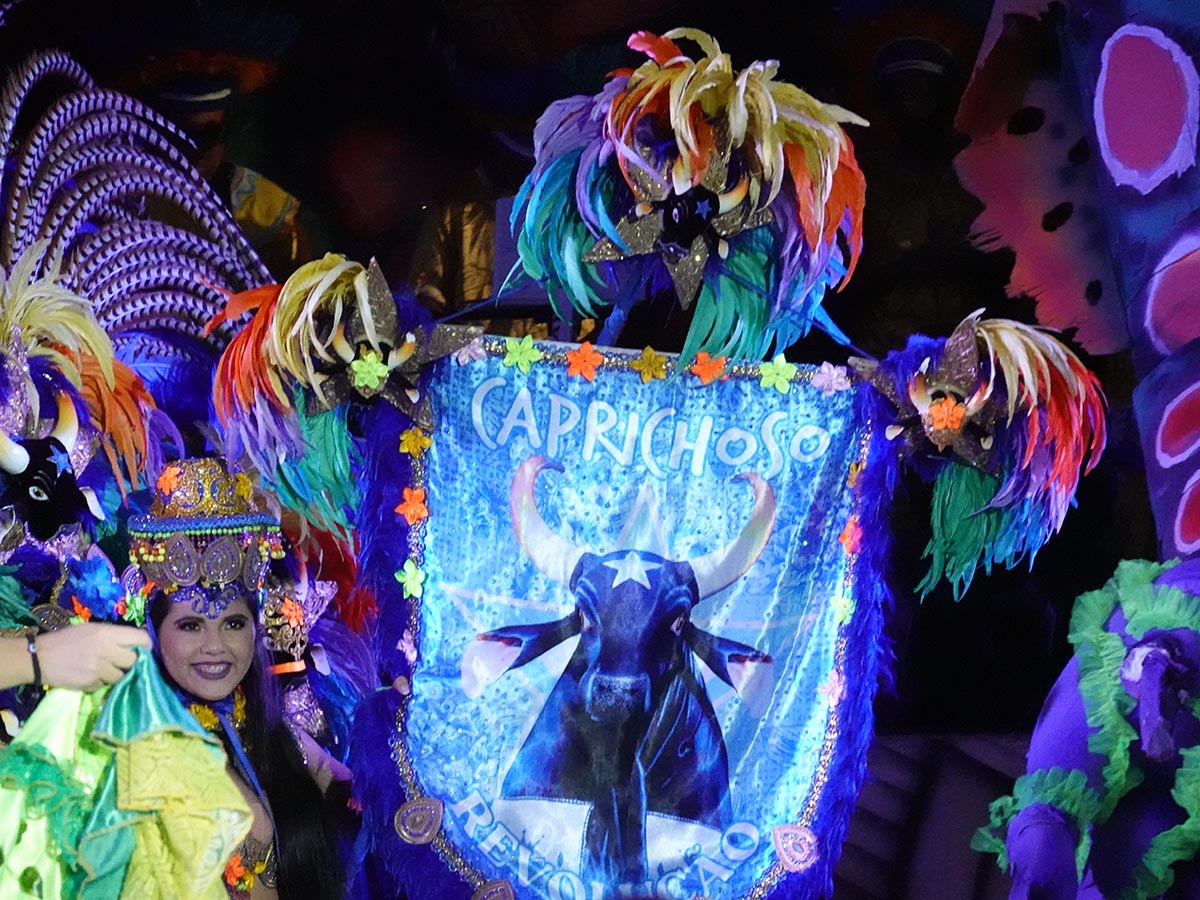
The festival is played out with 2 teams; a blue team, Caprichoso, and a red team, Garantido. They must perform the legend within 2 1/2 hours. If they go longer they incur penalties.
During our visit to Parintins, we had the privilege of seeing a performance by a local tribe. It was lively, colorful, and full of energy. Pictures cannot do it justice.




Rubber Trees & Producing Manioc Flour
Ever seen a rubber tree? Did you know you could take a strip off the bark, gently rub it, and get a stretchy piece of rubber? Below is a rubber tree. Our guide demonstrated the technique and we all got to see how much we could stretch the string.

We heard from several tour guides about Henry Ford coming to the Amazon to develop the rubber industry. He bought several large parcels of land and built large American-style communities. Even with this major investment, he was not able to make it work. The managers were all Americans who did not understand the uniqueness of the soil and farming in Brazil. In the end, Ford was unable to produce rubber that went into tires for his autos.
Even though Ford was invited several times, he never visited the Amazon. His son finally sold the land back to the Brazilian government at a loss.
Cassava Root to Manioc Flour & Tapioca
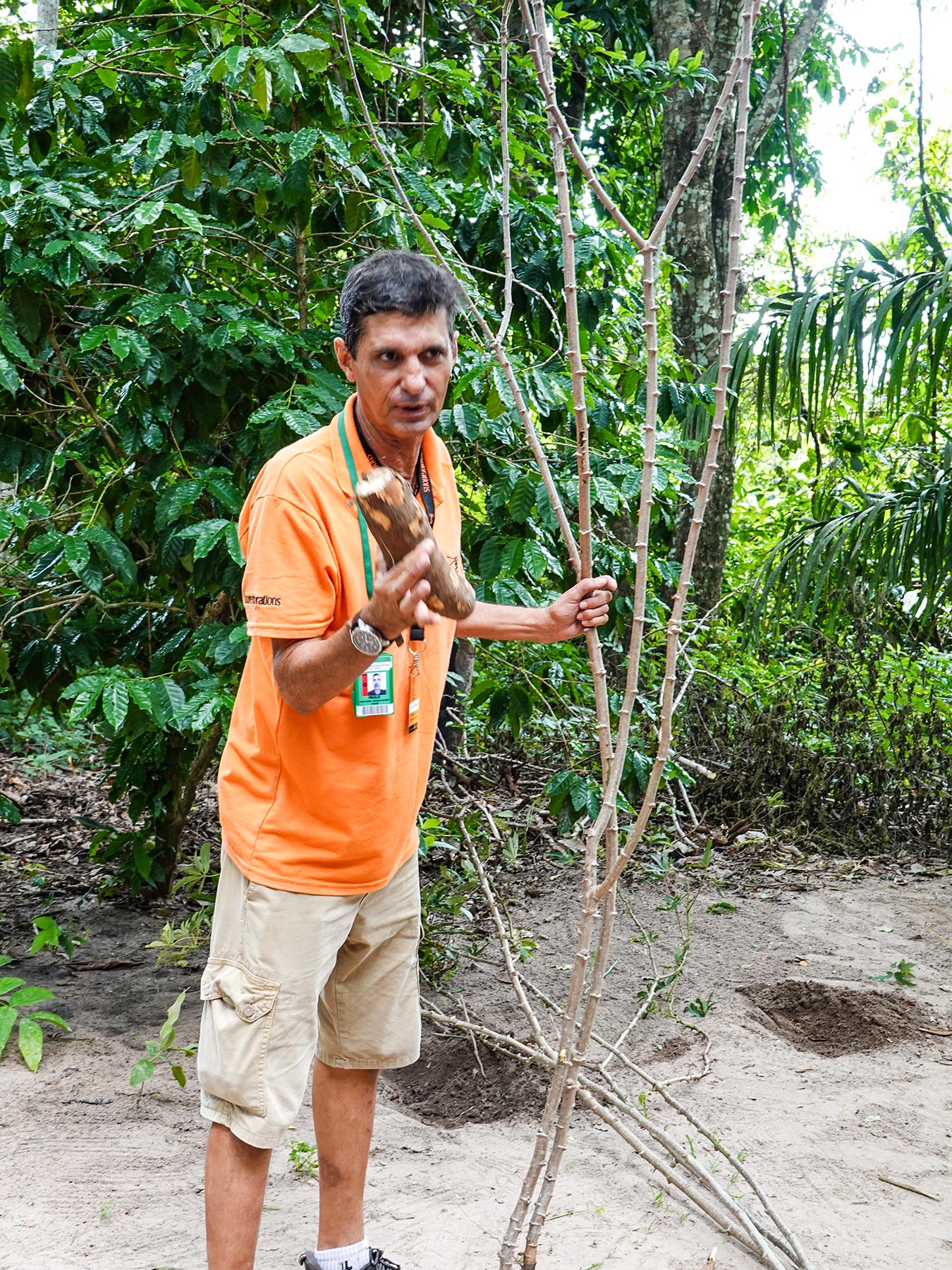
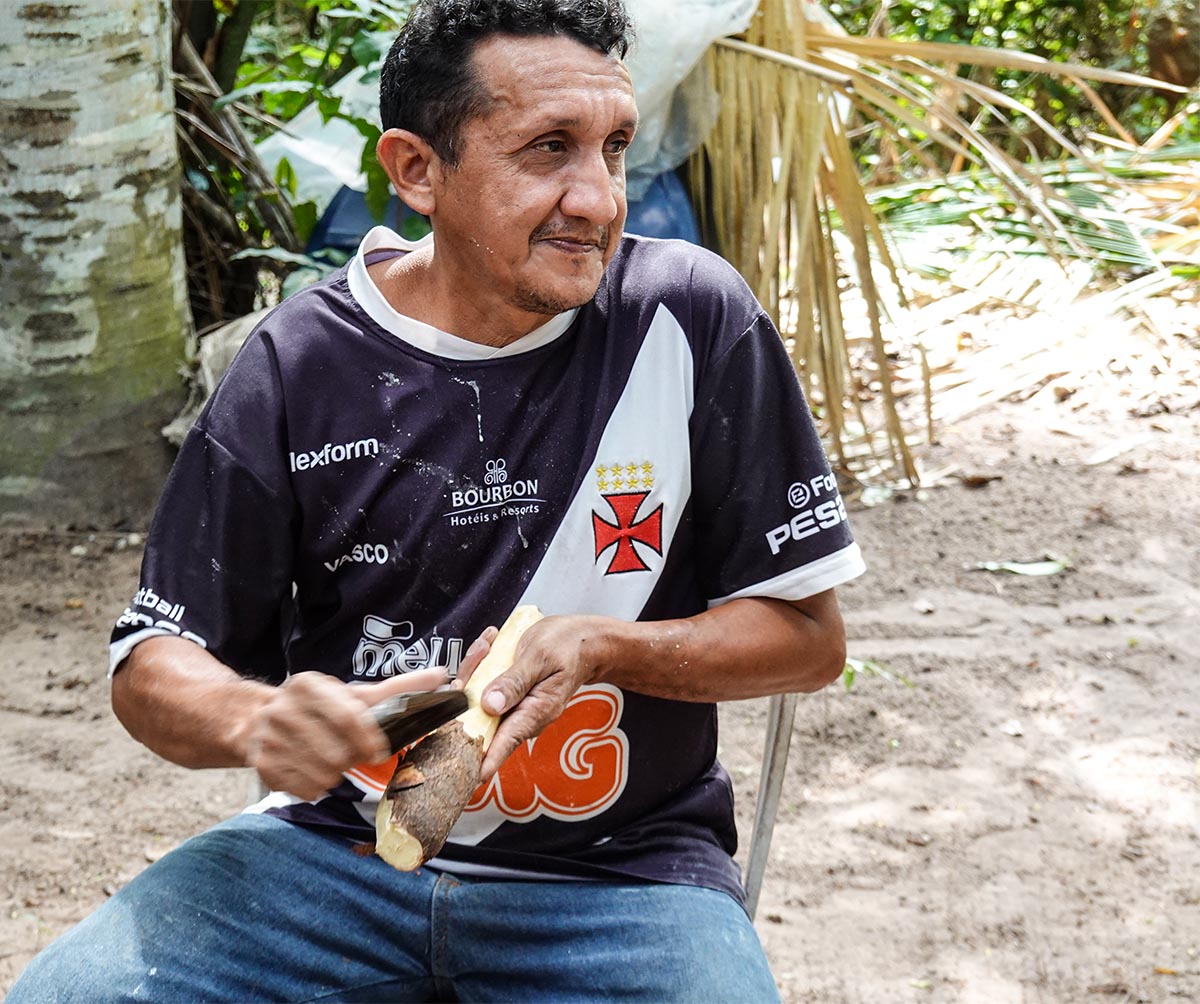
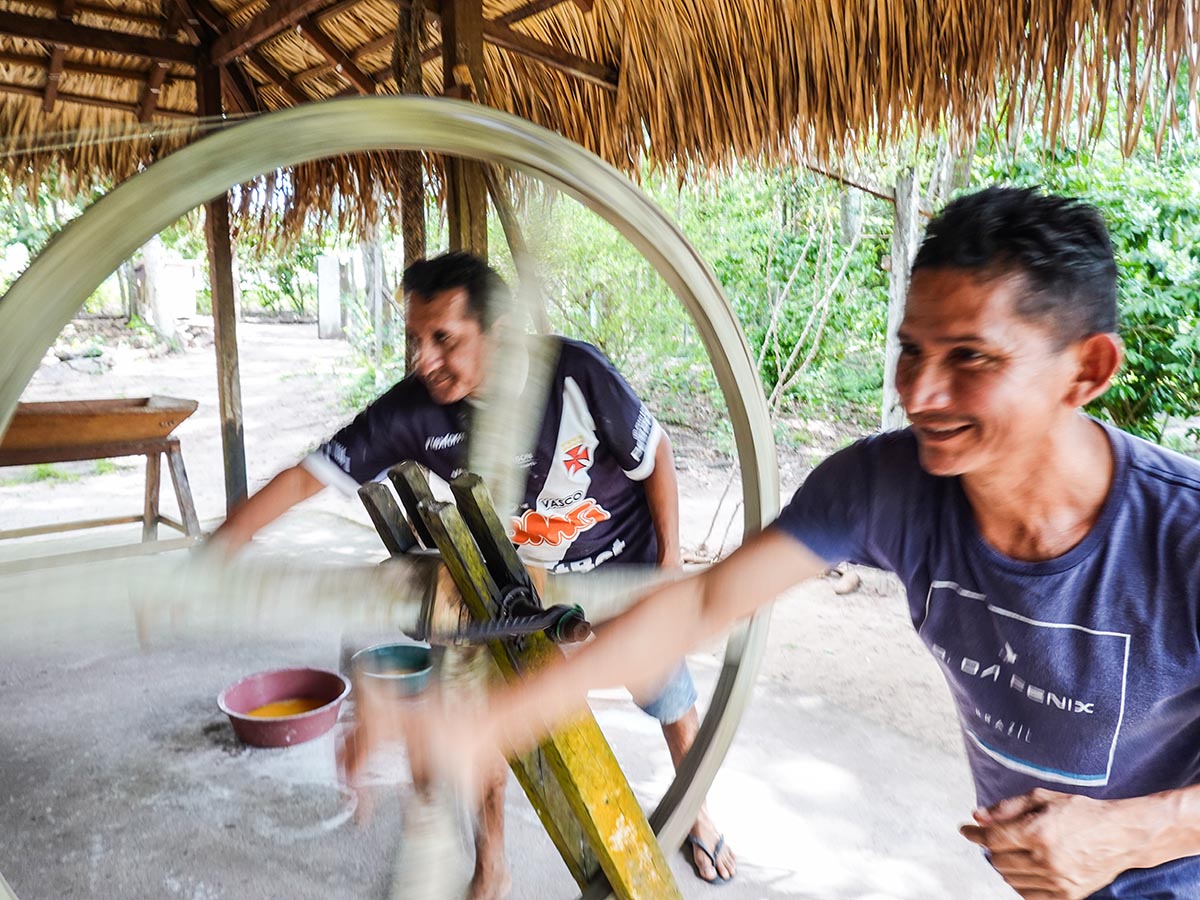
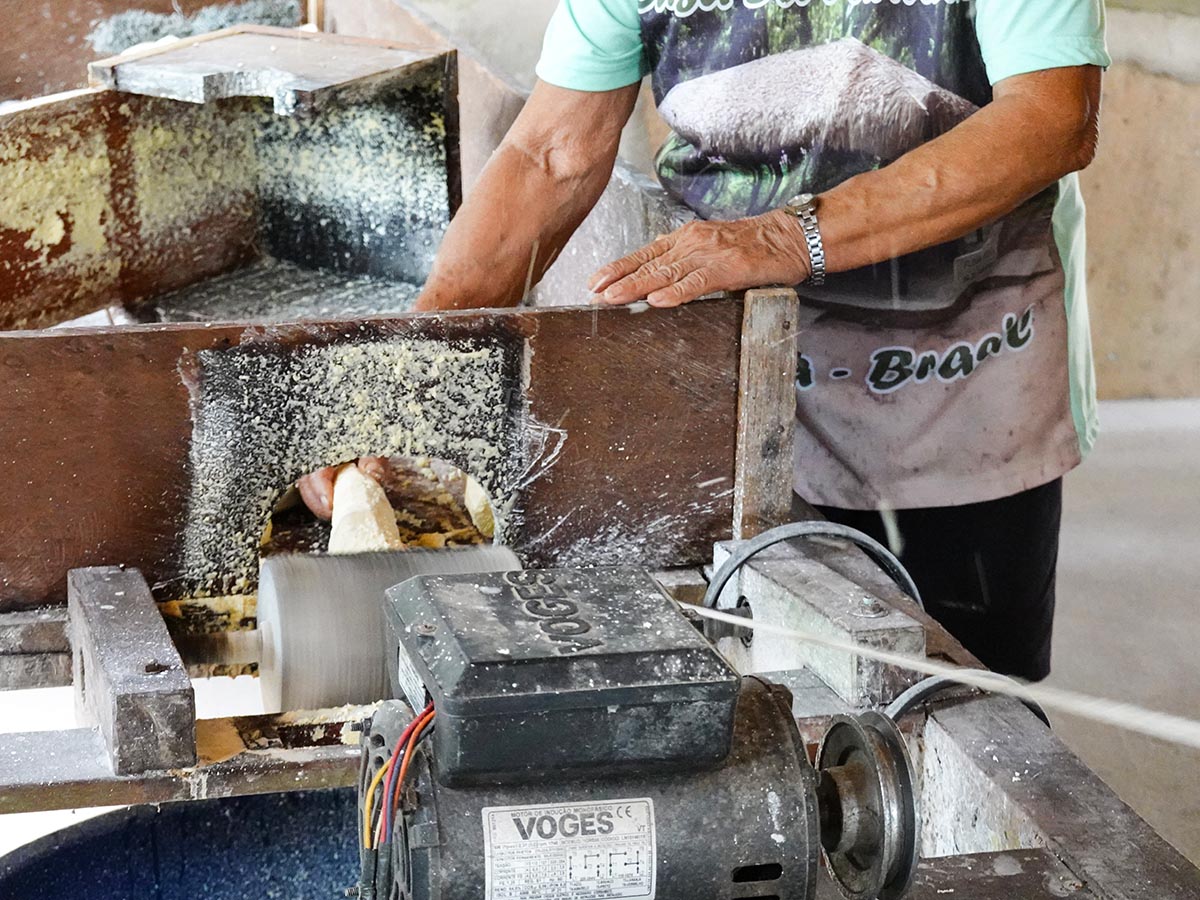
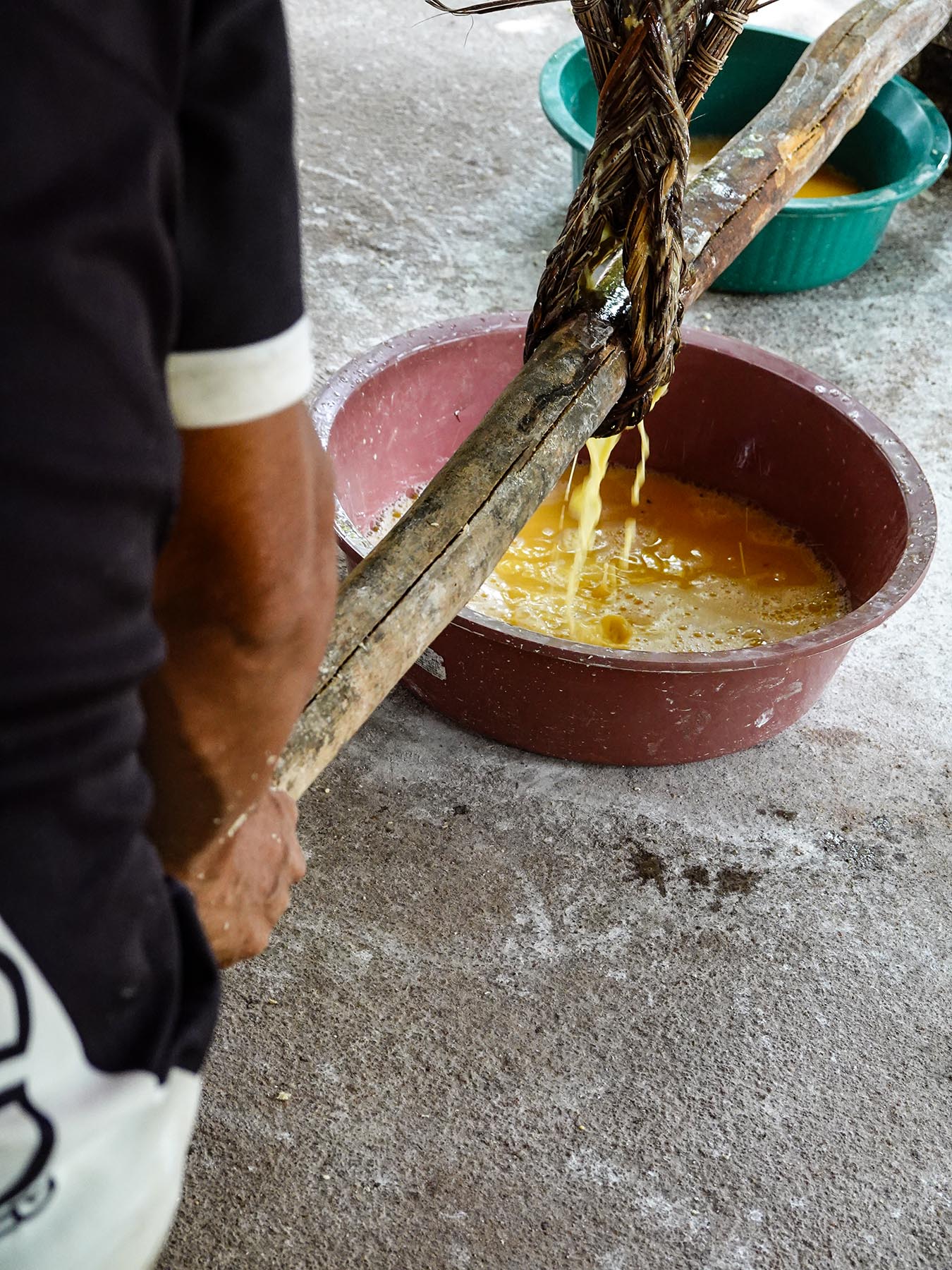
Manioc flour is made from the cassava plant. Manioc flour is a good source of vitamin B6, magnesium, and iron. It is also a good source of fiber, low in fat as well as gluten-free. Our guide showed us how to shave off the outer skin. Next, they showed both the older method of turning the wheel to grind the plant and a newer more efficient mechanized method of grinding the cassava plant. One of the surprising things we learned was cassava also makes tapioca. The process is to put the ground plant into a round woven tube and then squeeze the starchy liquid out into a bowl and let the liquid evaporate. What is left is tapioca.

Alta de Chao
We met a local family while we were walking around this idyllic little seaside village. He was having a drink with his wife and 2-year-old daughter. He lived and worked in the US and Europe for over 20 years. He said he made his money and traveled the world but when it came time to settle down he chose Alta de Chao because it was a slower pace of life as well as a safe place to raise a family.
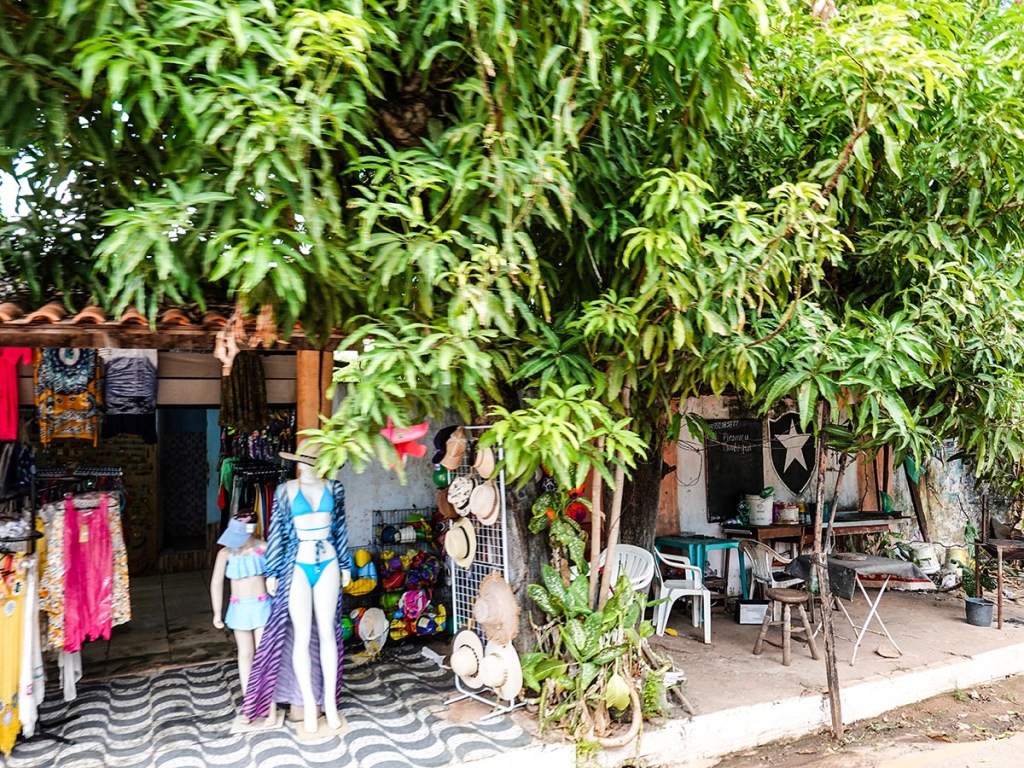
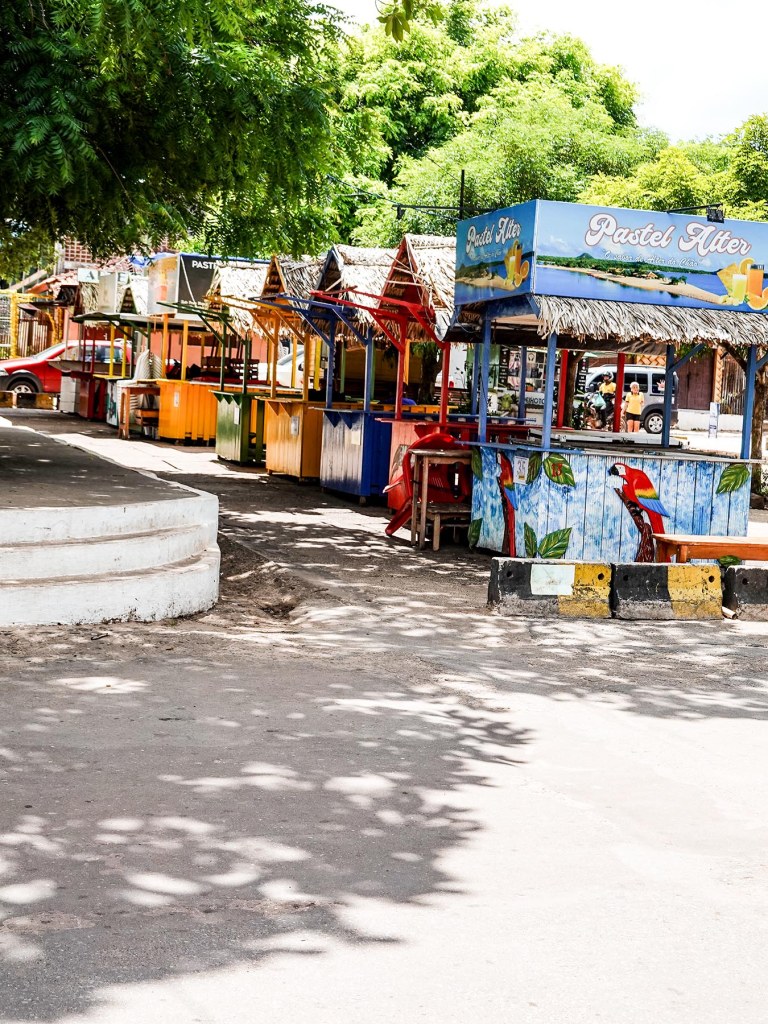
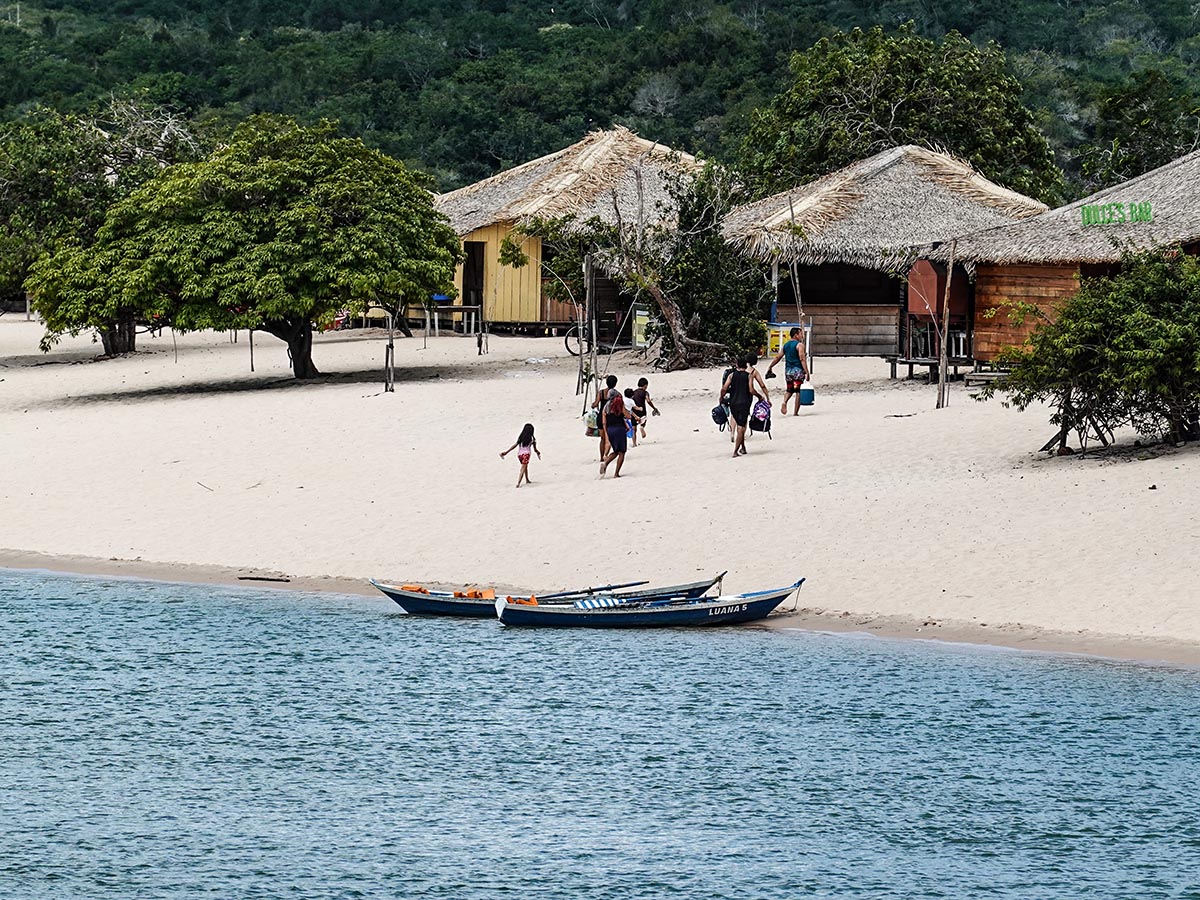
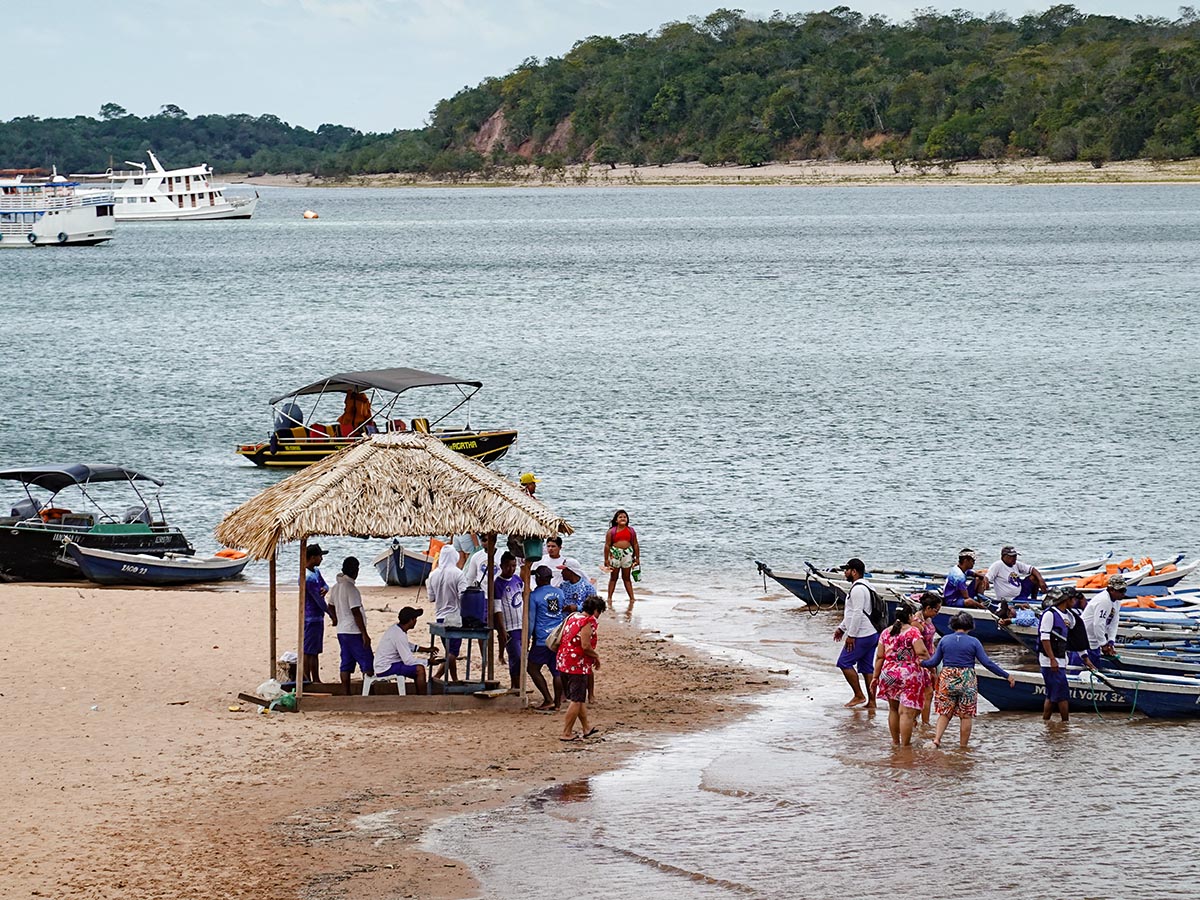
Indeed Alta de Chao was a hidden gem. Brazilians vacation there and a few cruise ships visit the village otherwise it is largely undiscovered. The calm beach is good for swimming. Locals provide canoe tours along the Rio Tapajos tributary of the Amazon. The village had a few local shops and restaurants. Santerem was the closest city about 45 minutes by bus or car.
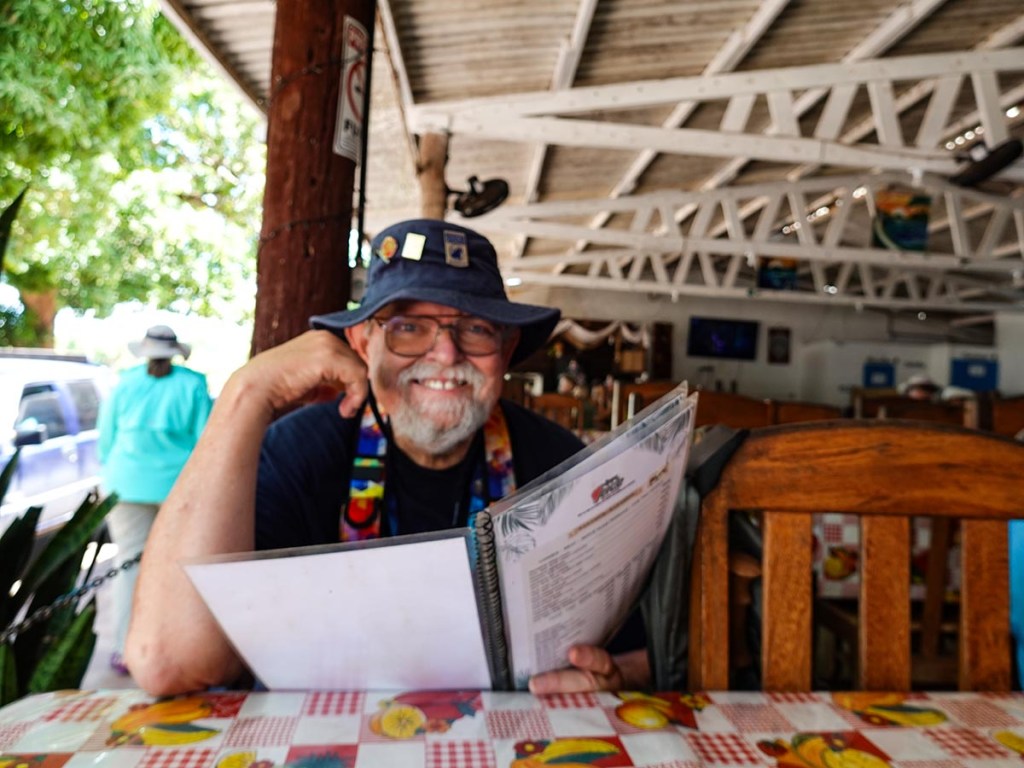
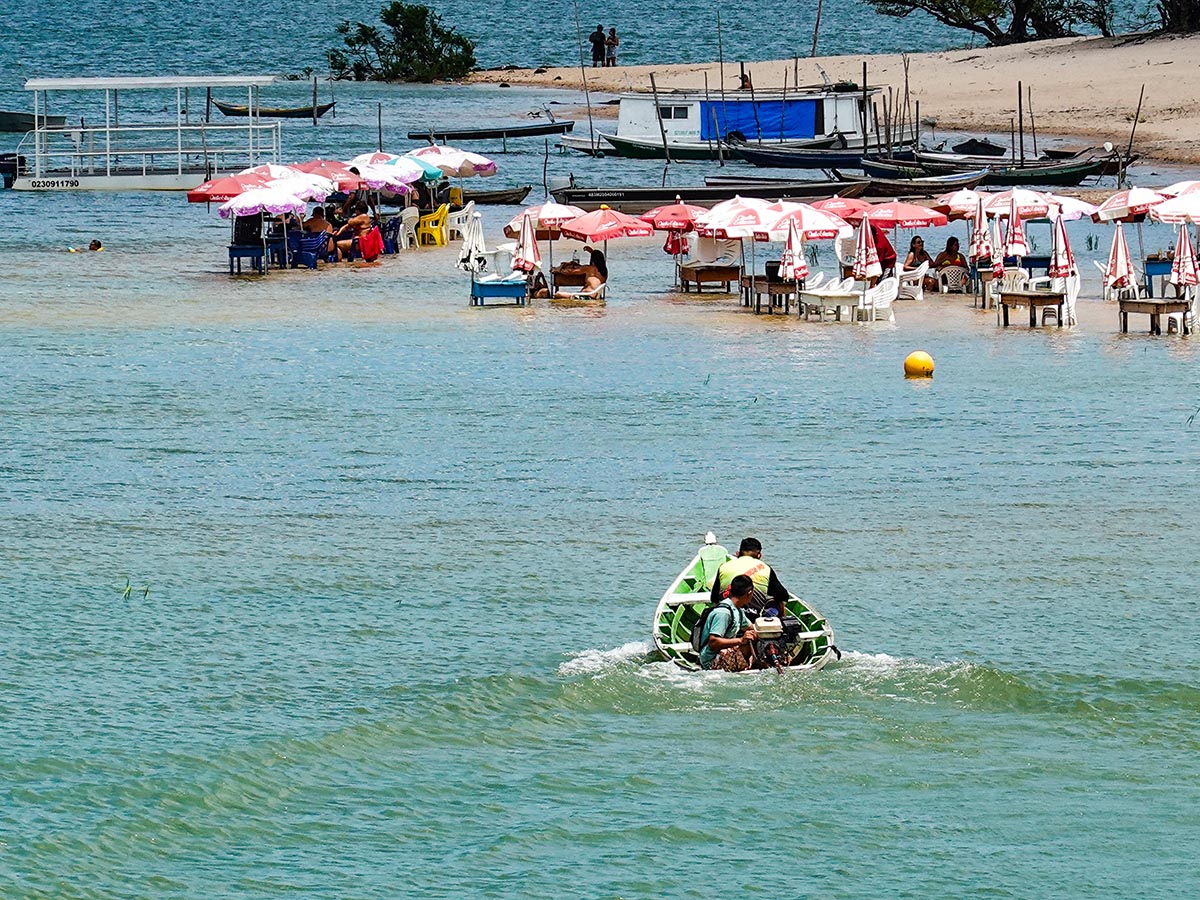
Below are photos of Alta de Chao. Notice the restaurant that is in the water. If we had more time, that would have been my choice. Imagine a hot day and getting served a meal while your feet are cooling off in the river.
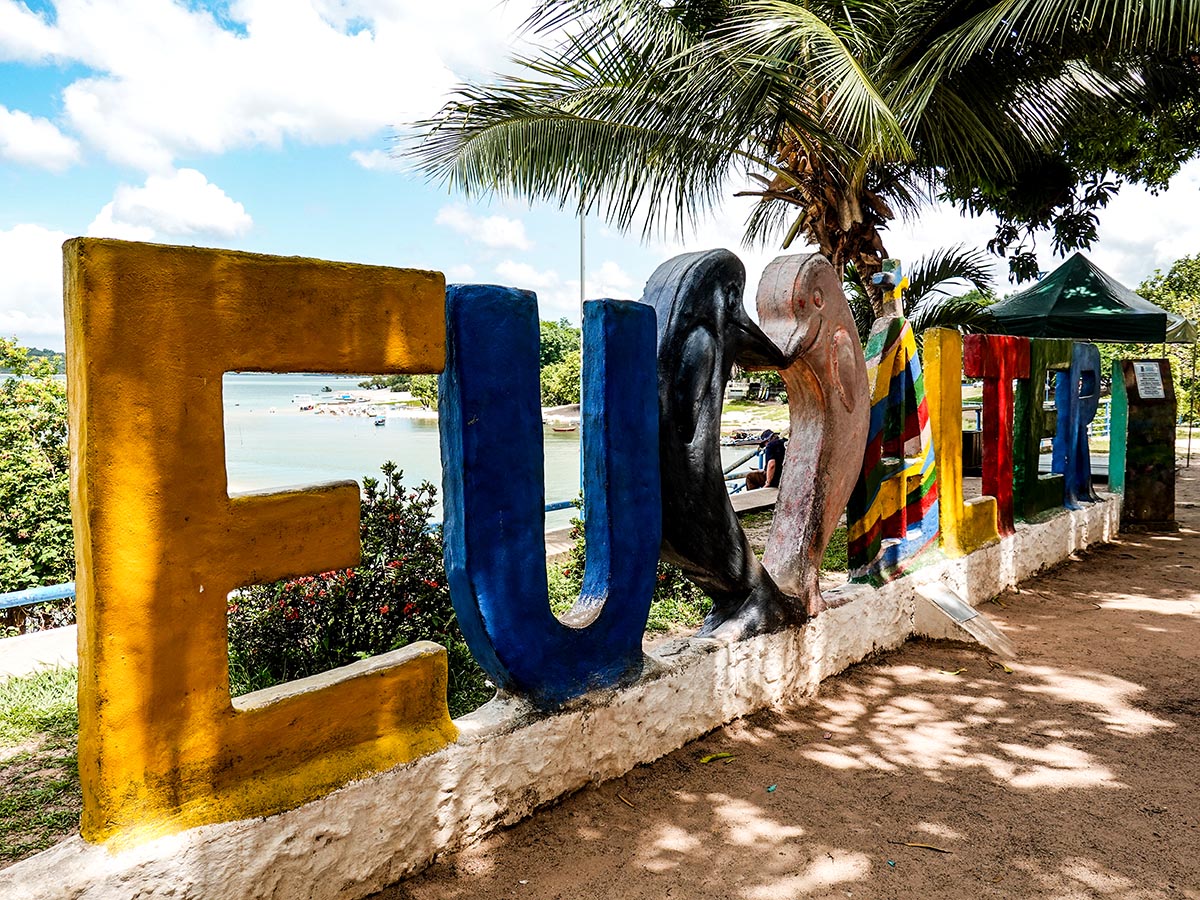
I noticed that each city/village sign started with “EU”. I asked our tour guide what “EU” stood for and found out it meant “I.” Add the dolphins in a heart shape and you have “I love Alta”.

Santerem
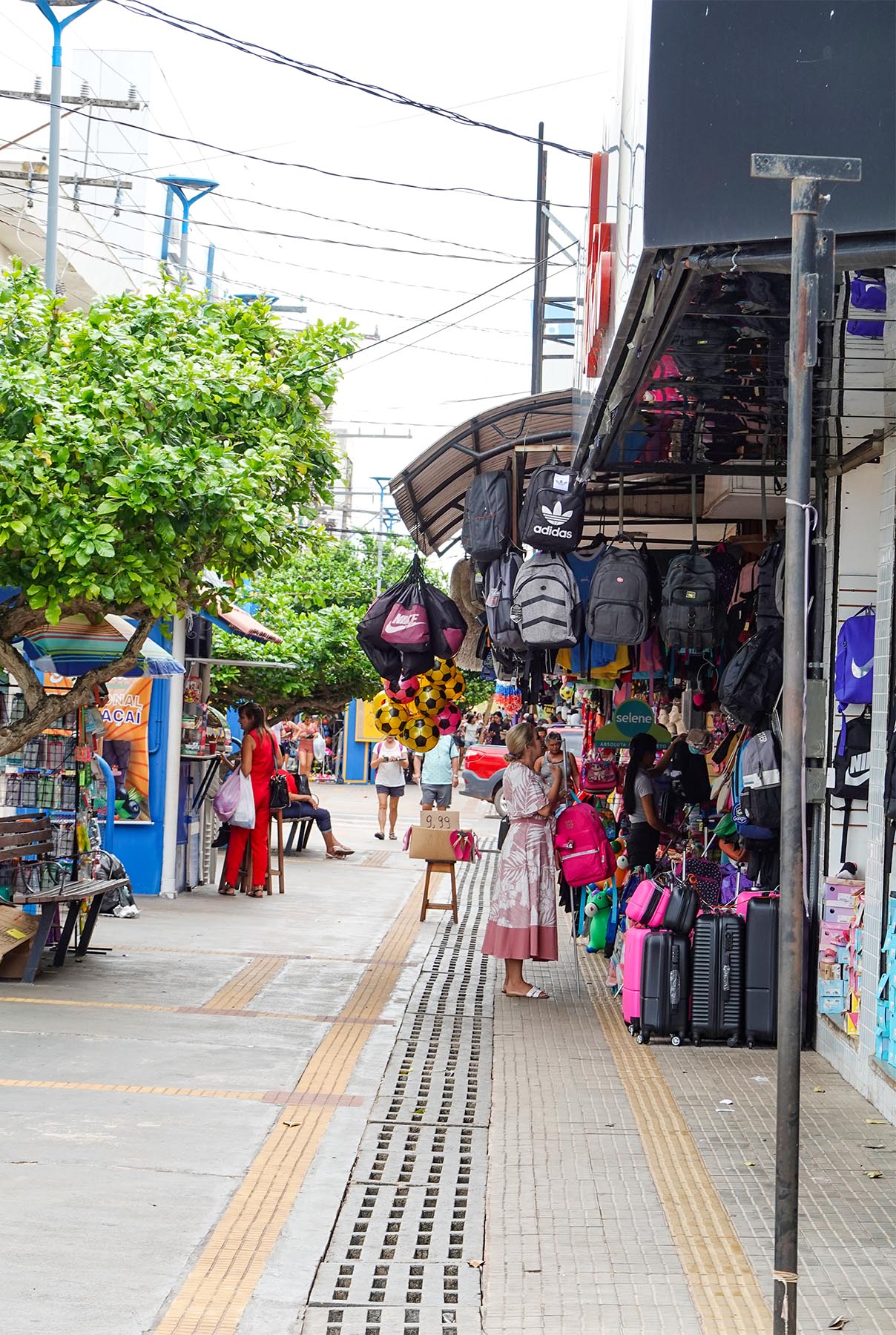
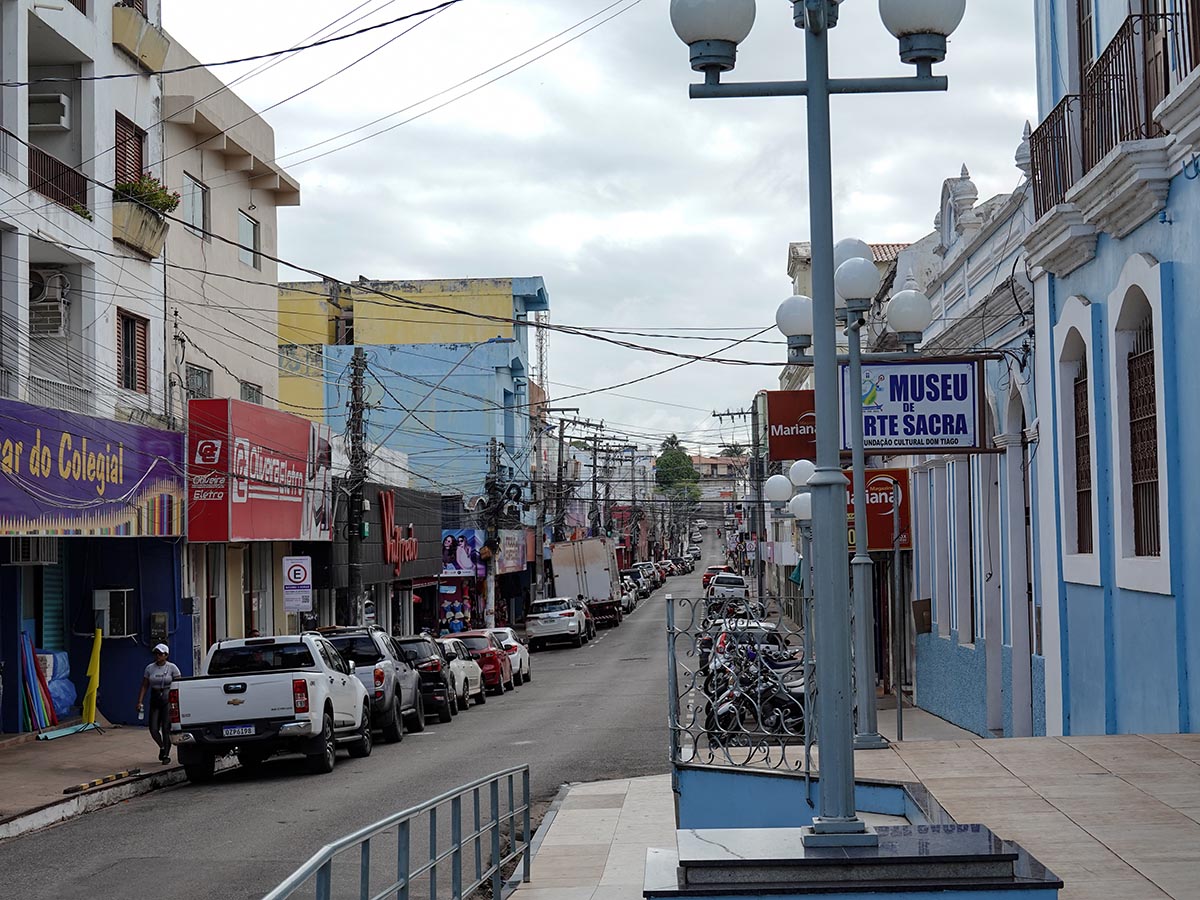
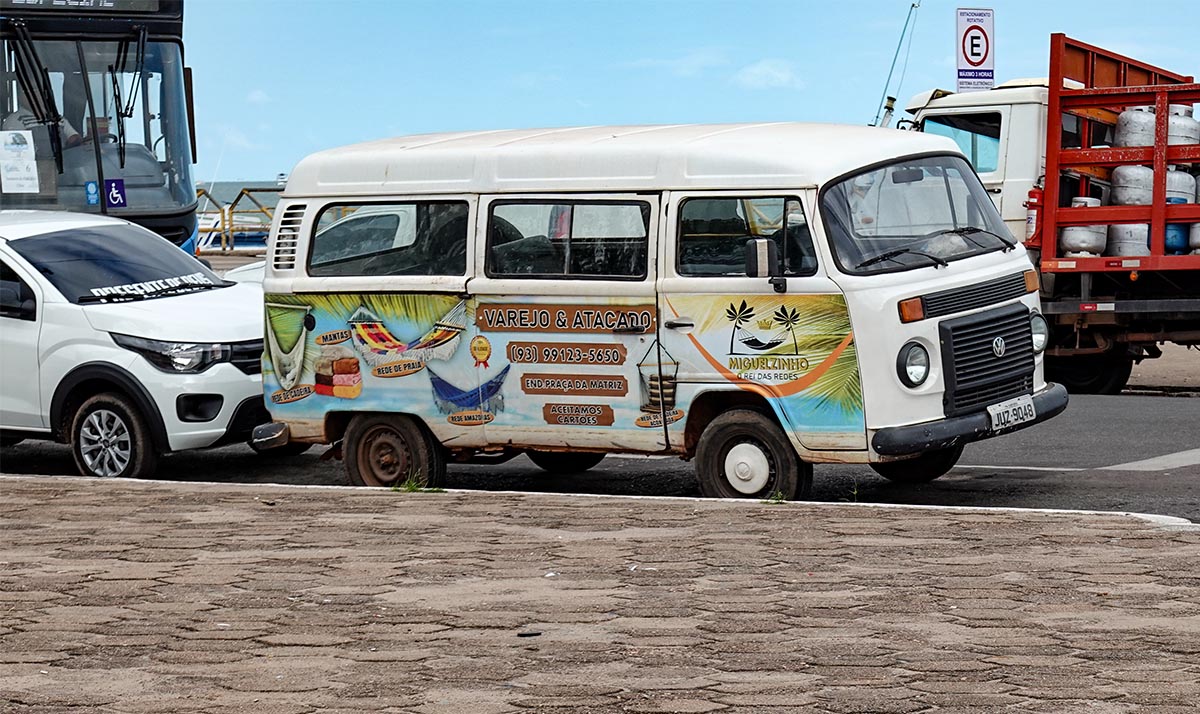
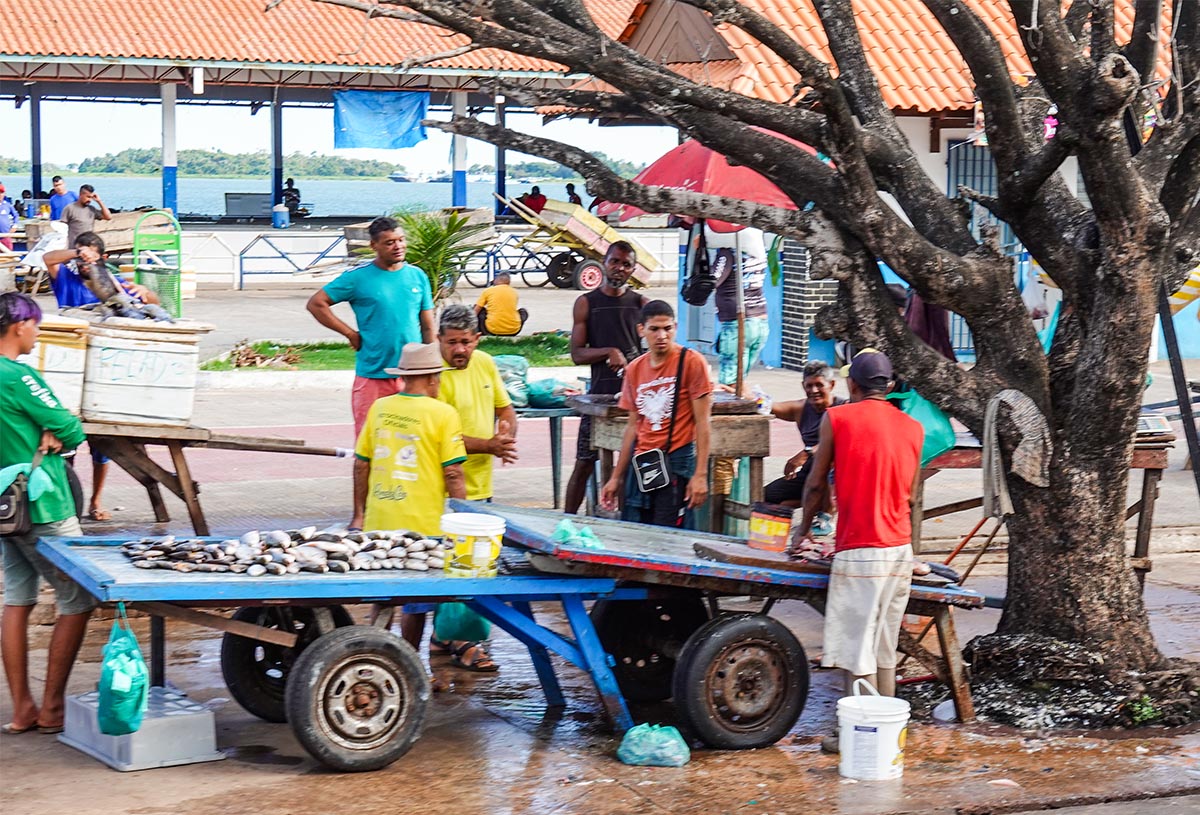
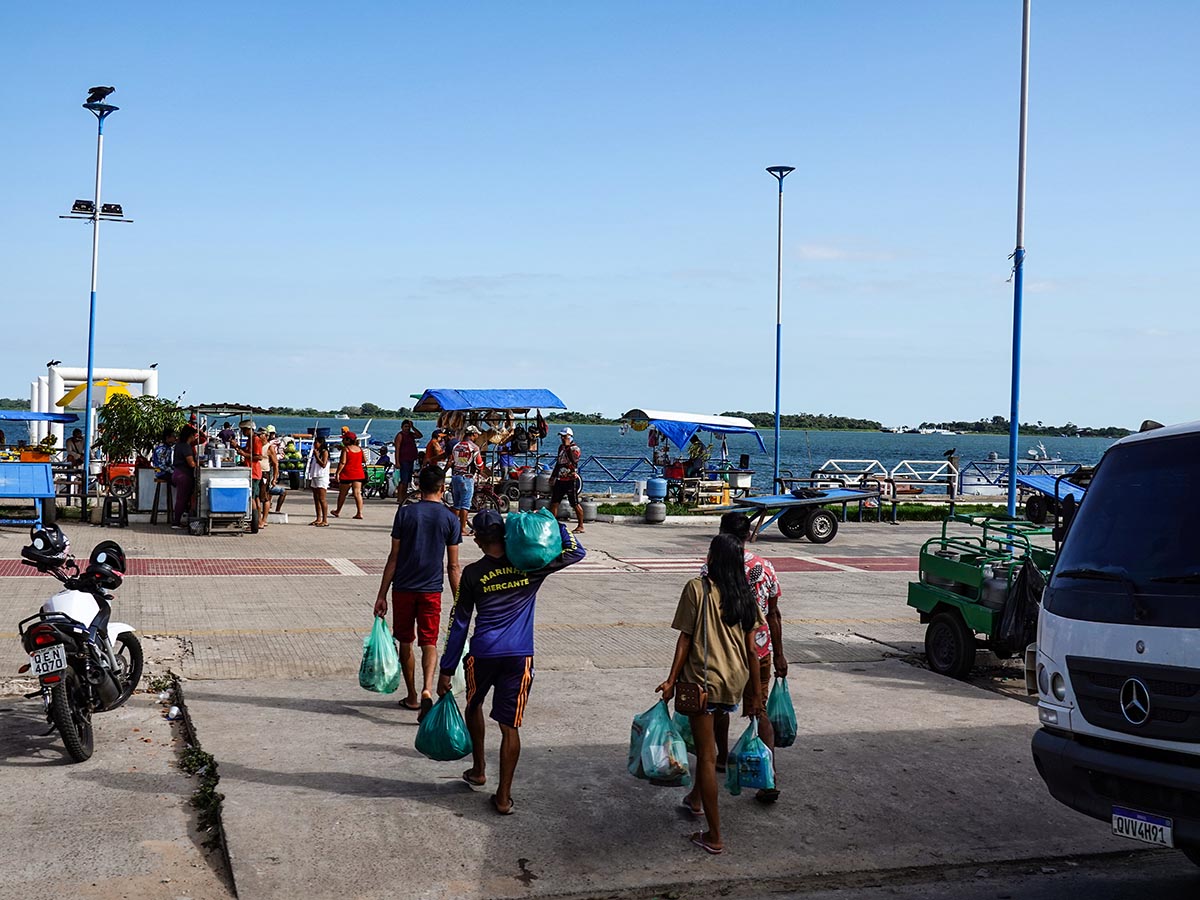
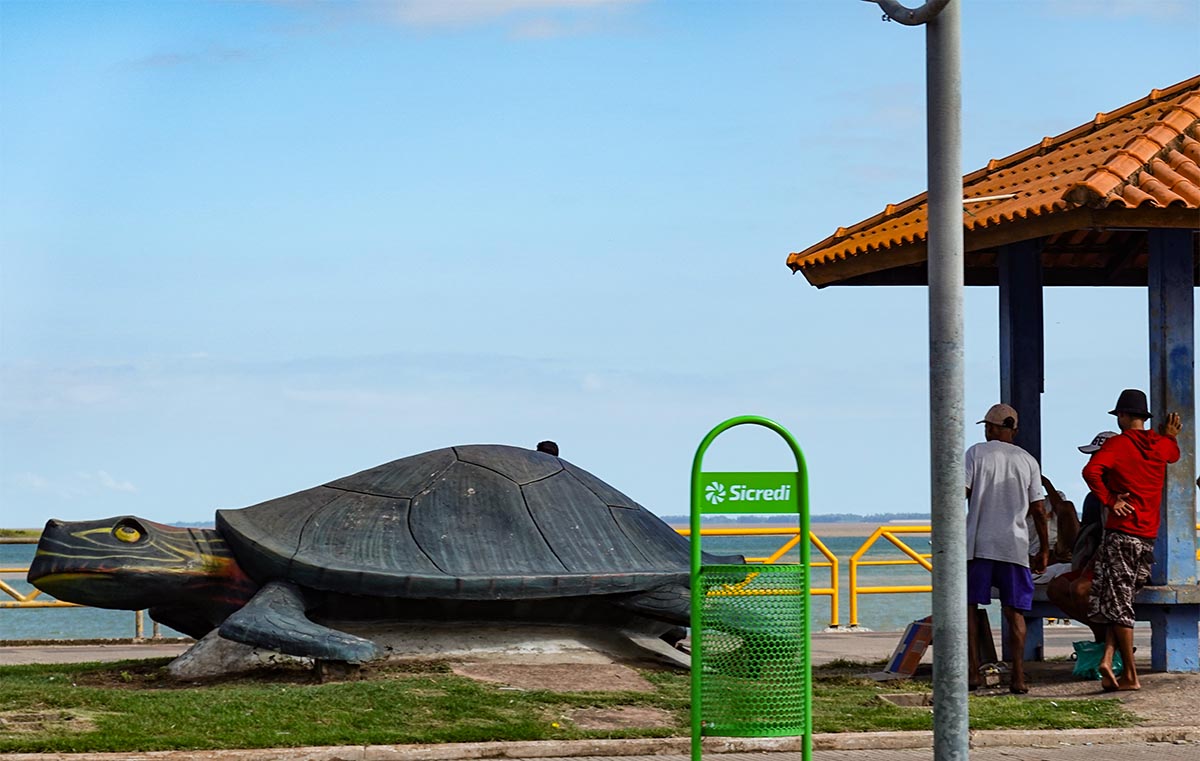
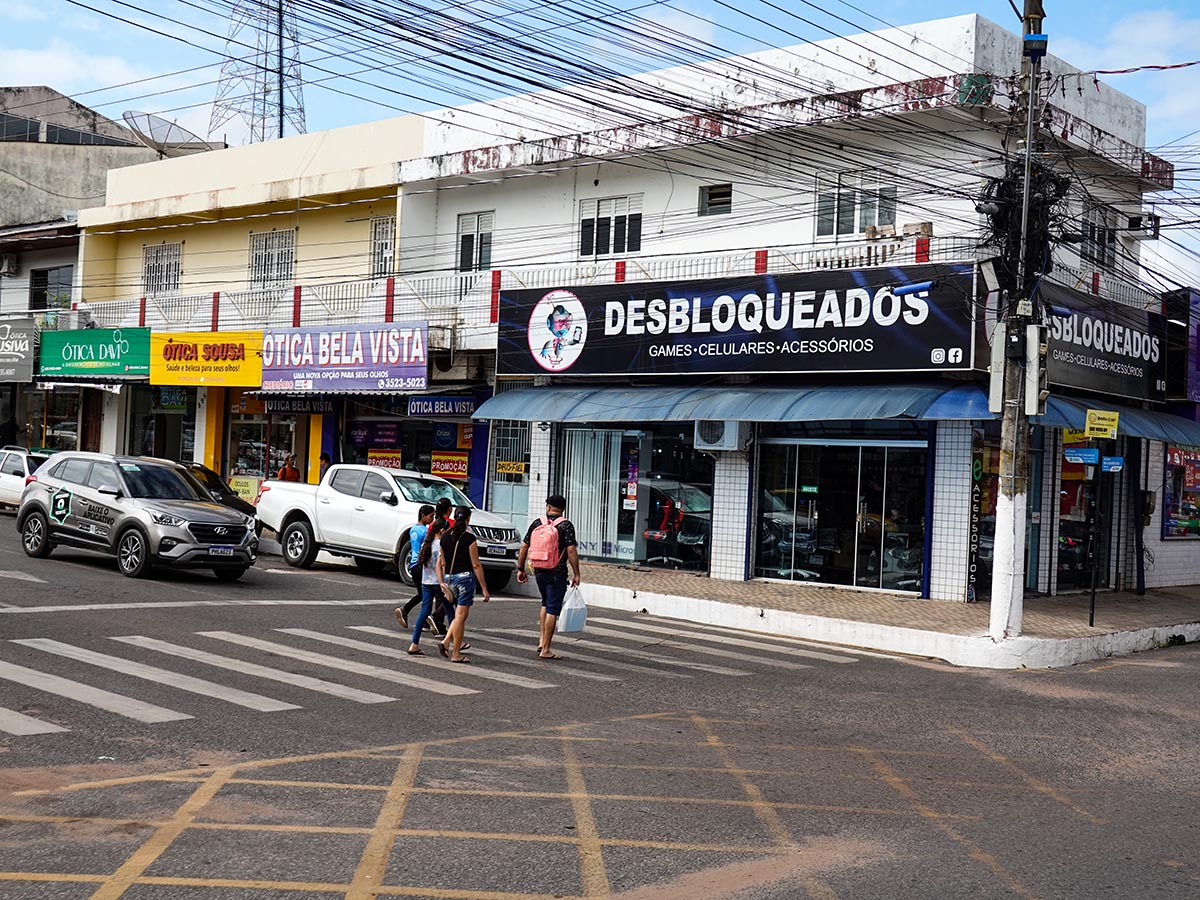
Whenever possible we tend to go for the small rural villages, historical sites, or nature experiences rather than large city tours. We did drive through Santerem, stopping at a church. Here are a few photos of everyday life in Santerem taken from that stop as well as from the bus.





 Two seniors traveling the world
What a lot of cool things you saw and learned! Thanks for sharing!!
LikeLike
Just awesome reading your Blog. Thanks so much !! Rob
LikeLike
thanks Rob
LikeLike
What wonderful memories and facts you are gathering and making!
Sharon Russell
LikeLike
Another great travel story. Thank you for keeping us UpToDate.
LikeLike