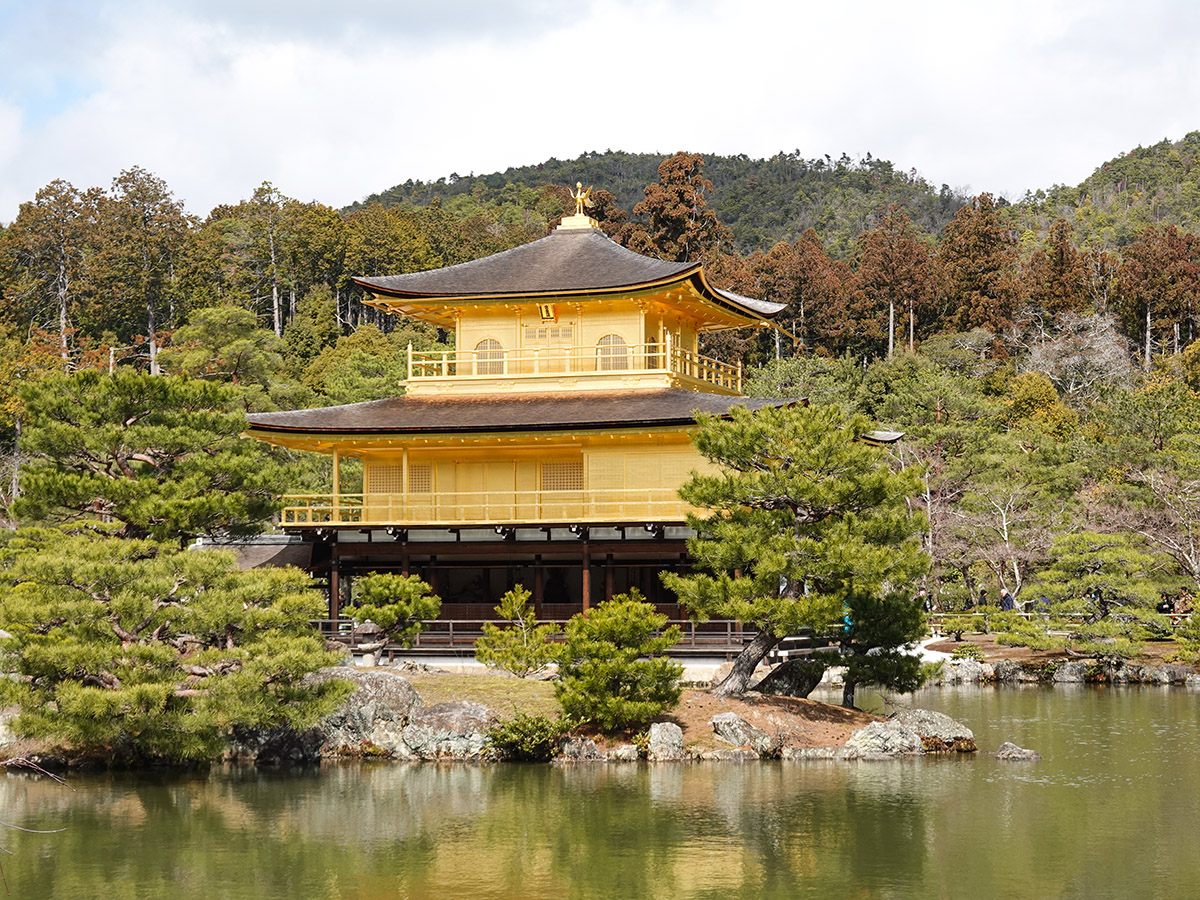
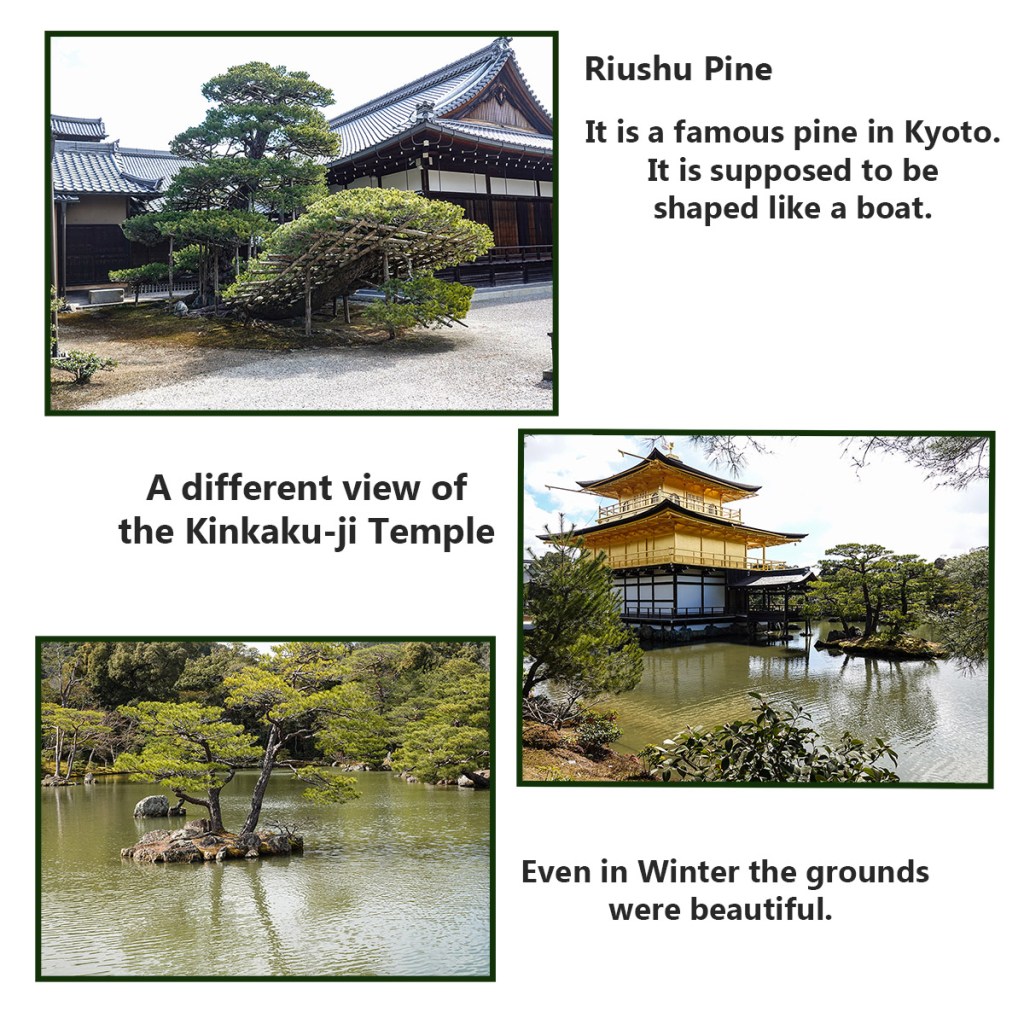
We went to a lot of Temples in Japan. Each had a beauty of their own. The most striking was the Kinkaku-ji (gold temple). It is now a Buddhist temple. It started as the home of the Salonji family. In 1397 the third Shogun of Ashikaga took it over and built the Kinkaku. It became the center of politics and culture and was used to welcome the Emperors of Japan and China. After his death, it became a temple.
Shogun
Legally the Shogun answered to the Emporer. They were military dictators at first answering to the Emporer and eventually took over military, administrative, and judiciary functions.
Meiji Shrine
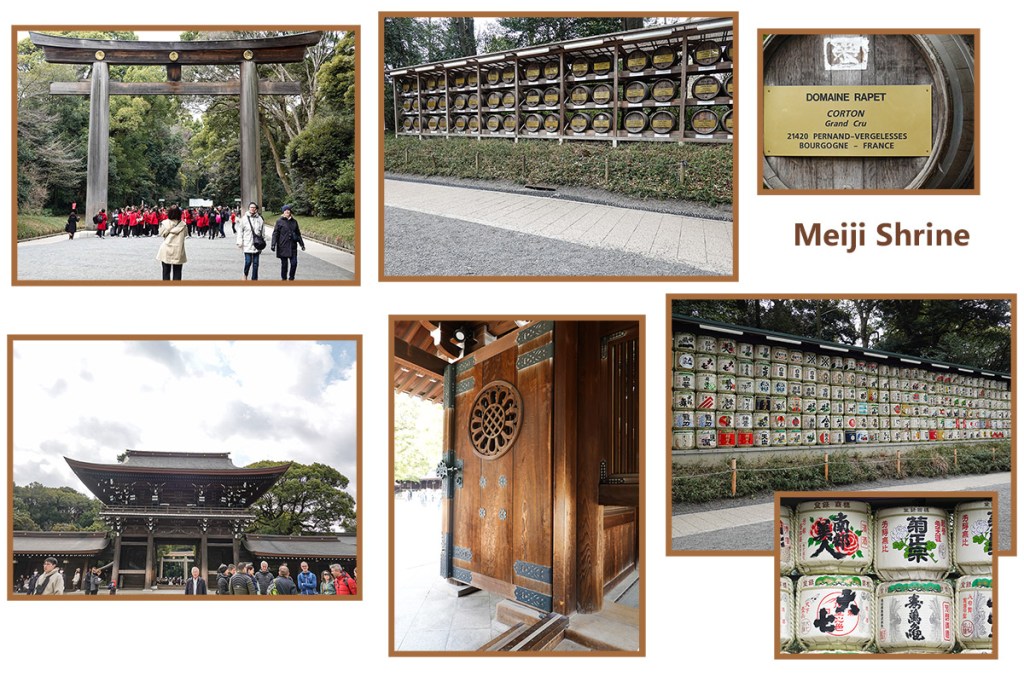
This temple was destroyed during WWII and rebuilt. Only the Torii gates are original and are among the largest in Japan. The shrine is dedicated to Emperor Meiji and his consort Empress Shoken. He was the first emperor of modern Japan. Born in 1852, he became Emperor in 1867 ending the feudal era. The shrine was built in 1920, eight years after his death.
Imagine our surprise when we found rows of wine and saki barrels at the entrance. Our guide told us that Saki is important during Shinto rites and festivals. The wine barrels were donated by French winemakers to pray for continued relationships between France and Japan.
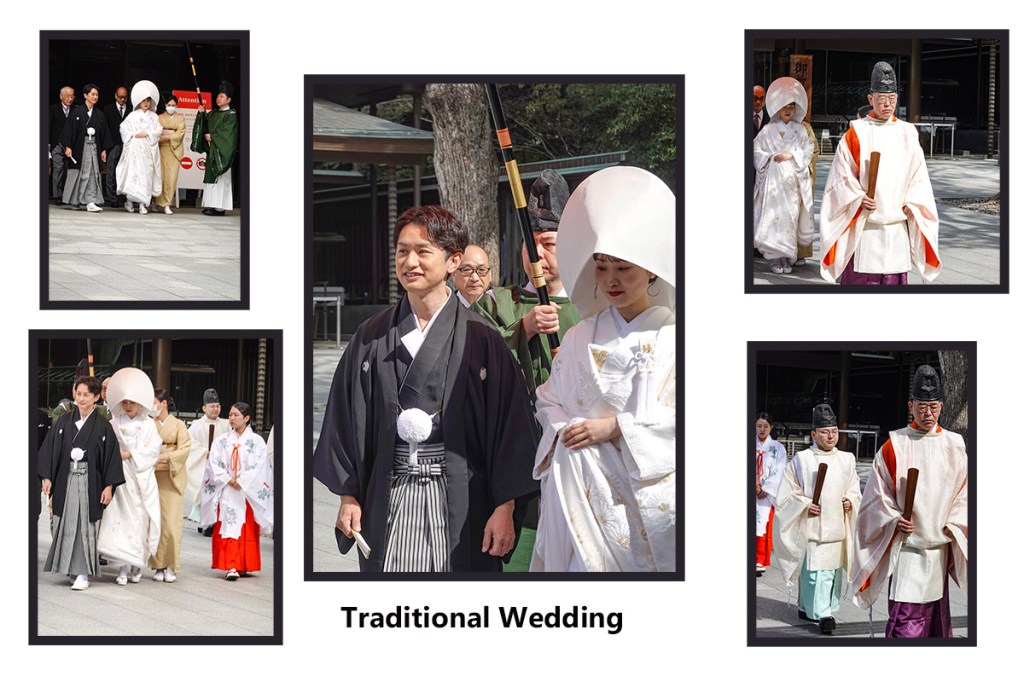
Meiji Shrine is often the site of traditional Shinto weddings. As we were getting ready to leave the shrine, we were fortunate enough to see a traditional wedding procession.
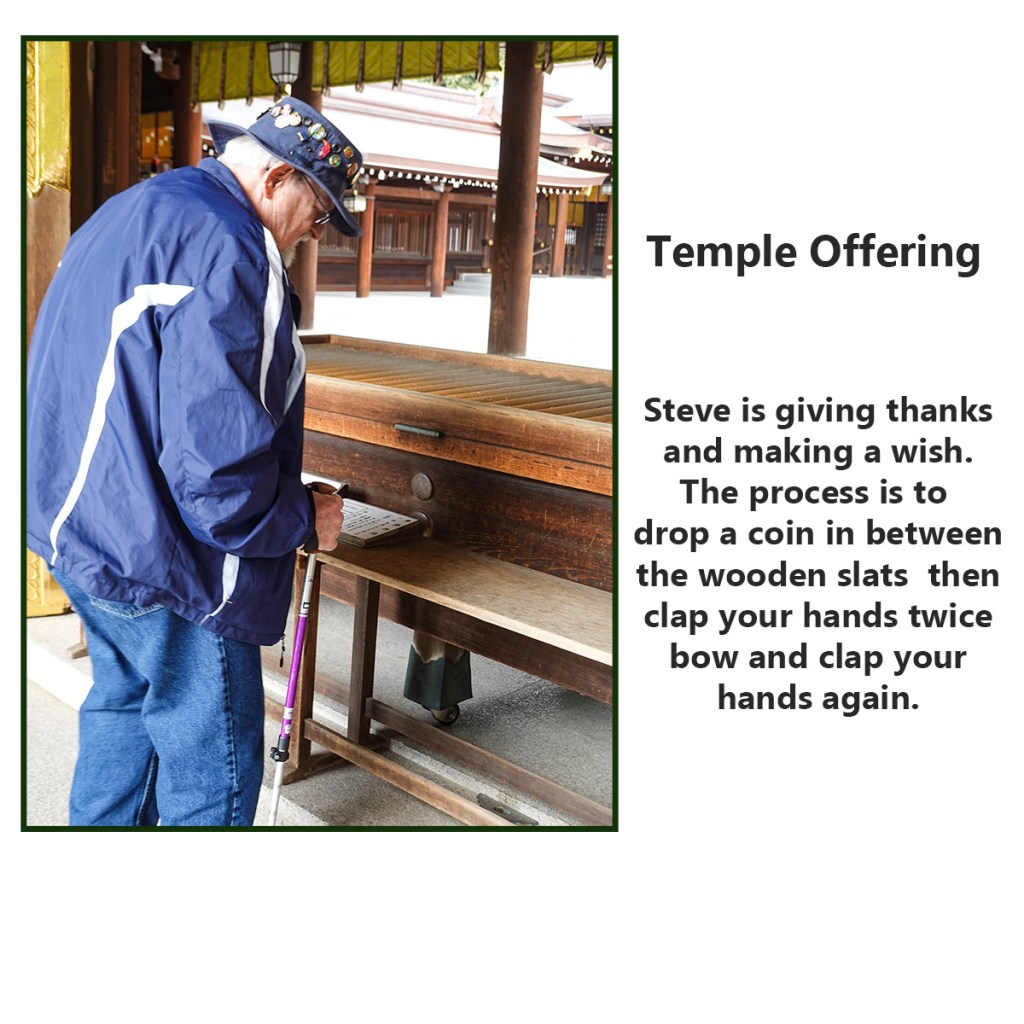
Making a Wish
Our guide showed us the process for making a wish. We each offered our coins and made a wish.
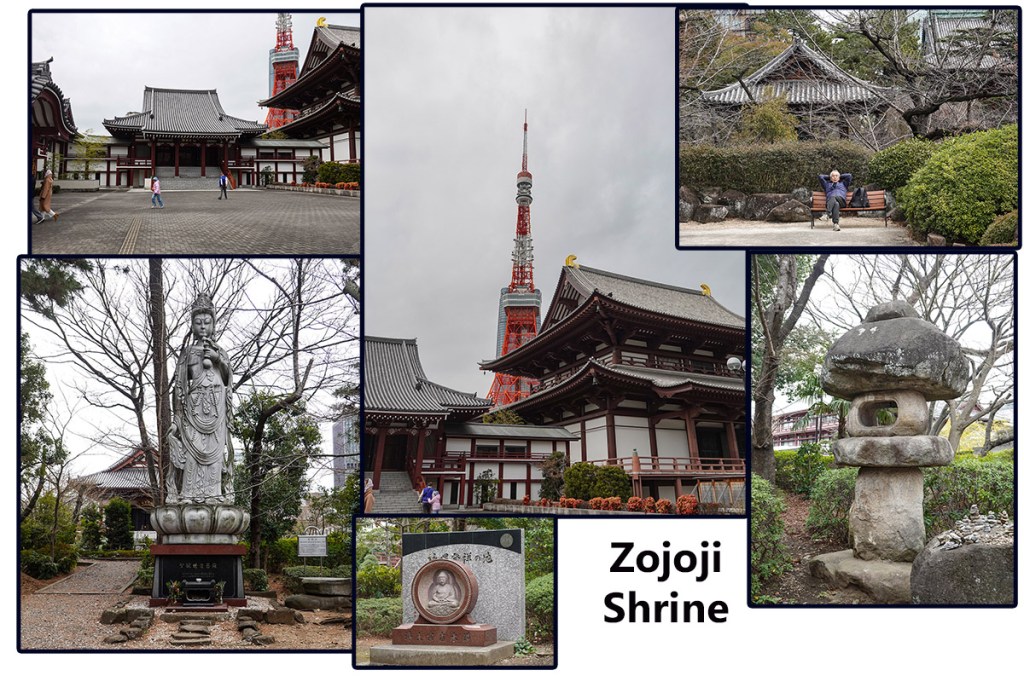
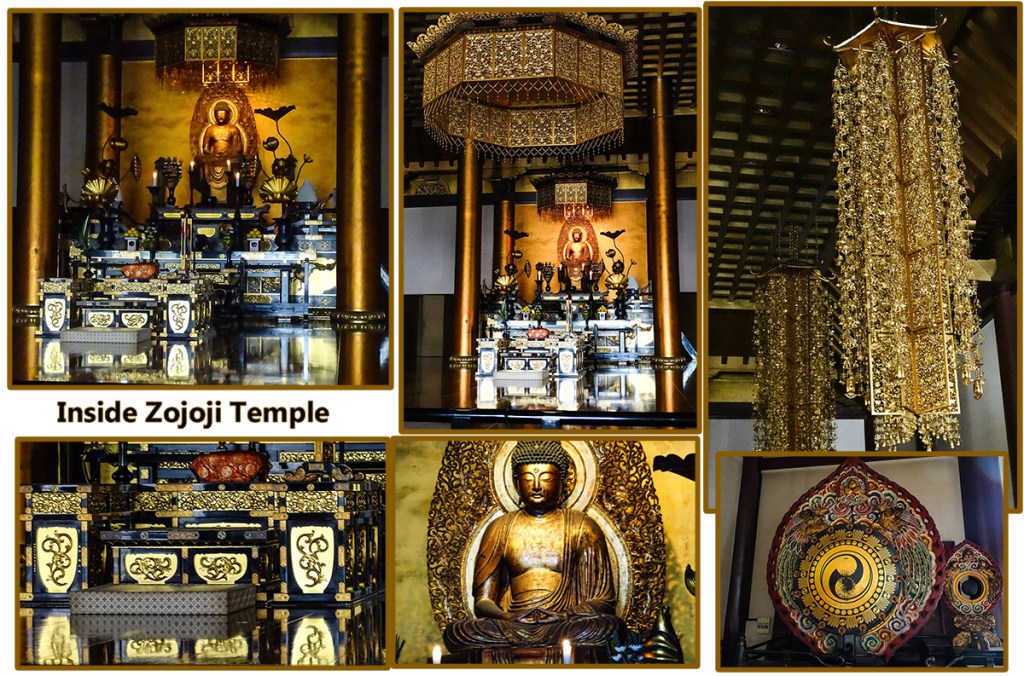
Zojo-ji Buddhist Temple
Zojo-ji Buddhist Temple allowed photos to be taken inside which is very rare with Japanese temples. Founded in 1393 by a Yuyo Shoso, the temple reached it’s peak between 1600-1868 during the Edo period. During that time it was the family temple of the Tokugawa shoguns. Most of the temples were damaged during WWII and have slowly been restored. Zojo-ji is now a popular center for religious and cultural activities.
One of the famous Tokyo landmarks can be seen in stark contrast to the temple grounds. The Tokyo Tower built in 1958 is a communications and observation tower and became a symbol of Japan’s rebirth following WWII. The design of the tower was based on the Eiffel Tower in Paris.
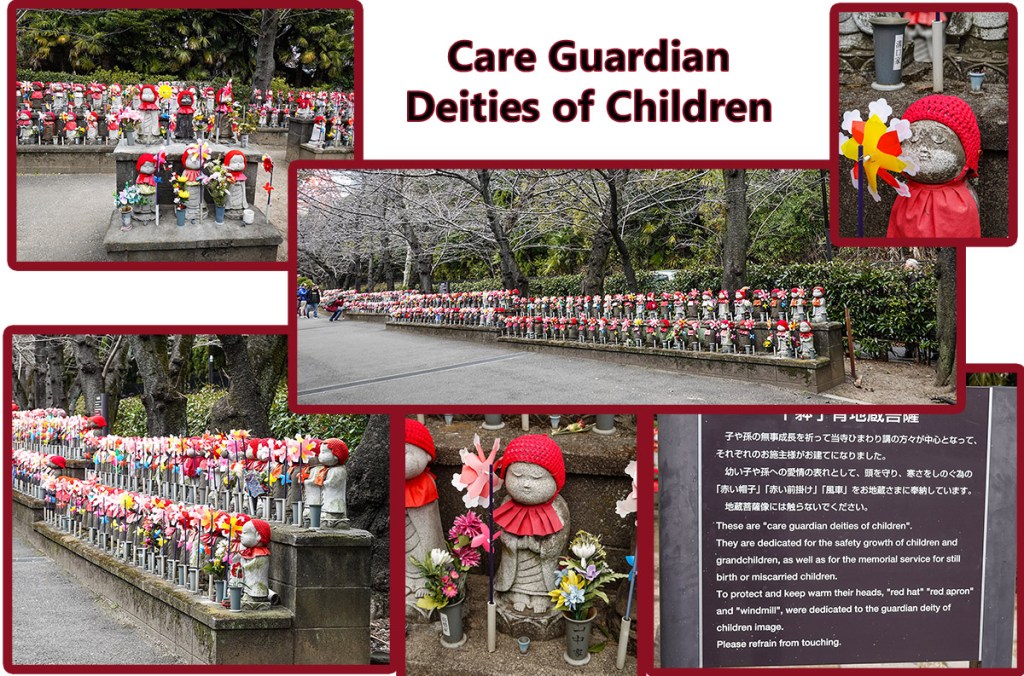
Celebrating a Baby’s First 100 Days
The Sensai Kosodate Jizo literally means “a thousand child-nurturing Jizo ”. About 1,300 Jizo statues wearing red hoods and holding pinwheels to expel demons and illness. According to the sign, these Jizos are Care Guardian Deities of Children. Parents who wish for their children’s health and parents whose children have passed away donate Jizo statues here and take care of them. The day we visited we saw a family bring their child to the gardens to celebrate 100 days of life. They were happy and encouraged us to take photos. They wanted to know where we were from. Our tour guide helped us with translating our journey around the world.

I hope this gives you a glimmer of Japanese Temples. We saw many more but I thought these were the most interesting and the ones that we had some interaction with Japanese culture and people
 Two seniors traveling the world
So much culture, thanks for sharing! Sharon Russell
LikeLike
This trip is overwhelming to me. You’ve seen so much beauty and diverse culture. What a blessing from God to have this opportunity! I will be interested in hearing your favorite place after seeing so much of this world.
LikeLike