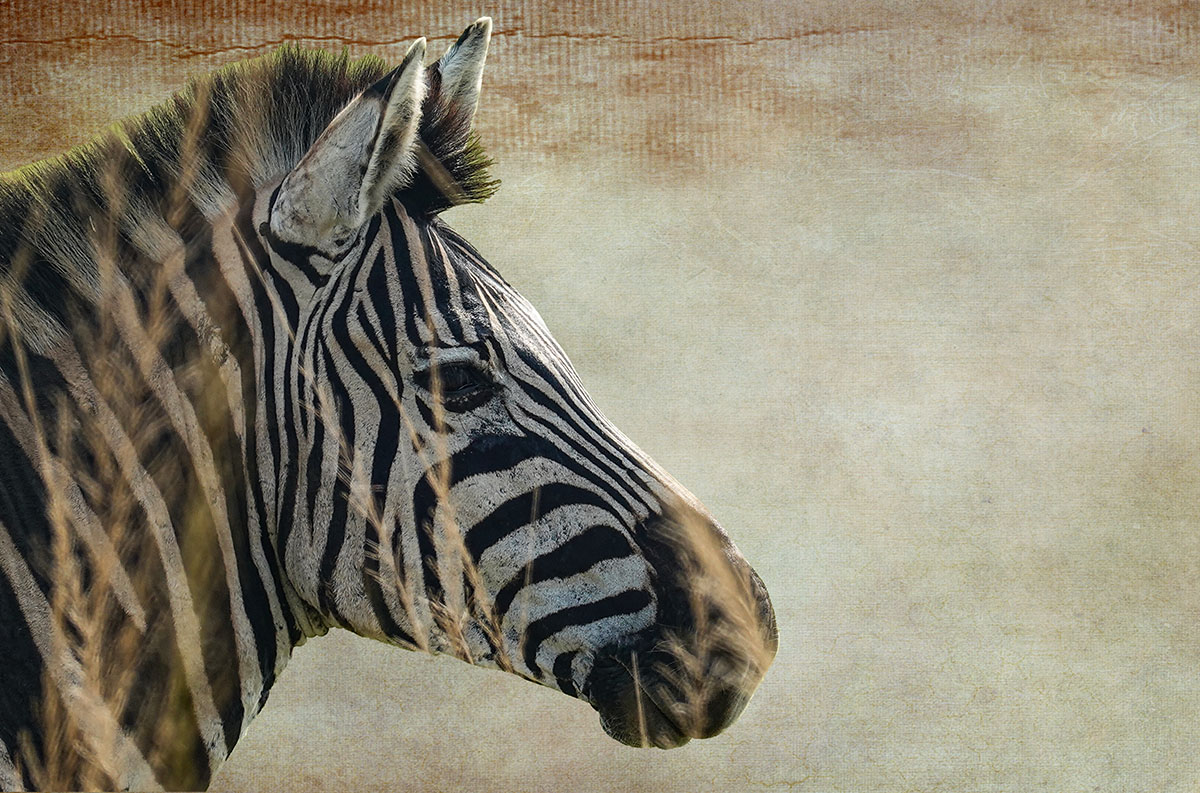
The new route: it doesn’t get much better for us. Why? We got to do a couple of Safaris. Choosing the excursions for our revised route around the southern tip of Africa, was a snap, the game drives were the obvious choice.
Tala Game Preserve, Durban, South Africa
The first safari was located outside of Durban in KwaZulu Natal. Our guide was a young Zulu woman studying the environment and its effect on education. She grew up speaking Zulu, however her English was excellent. On the way to Tala, she described some of the Zulu customs. The most fascinating custom was the “dowry”. A woman’s dowry is still measured in how many “cows” she can bring to the marriage. A man marrying a virgin will expect to receive 11 cows. If a woman has a child from a previous relationship, then you subtract a cow for each child. While it seems very antiquated, she spoke of the dowry as a normal part of Zulu life.
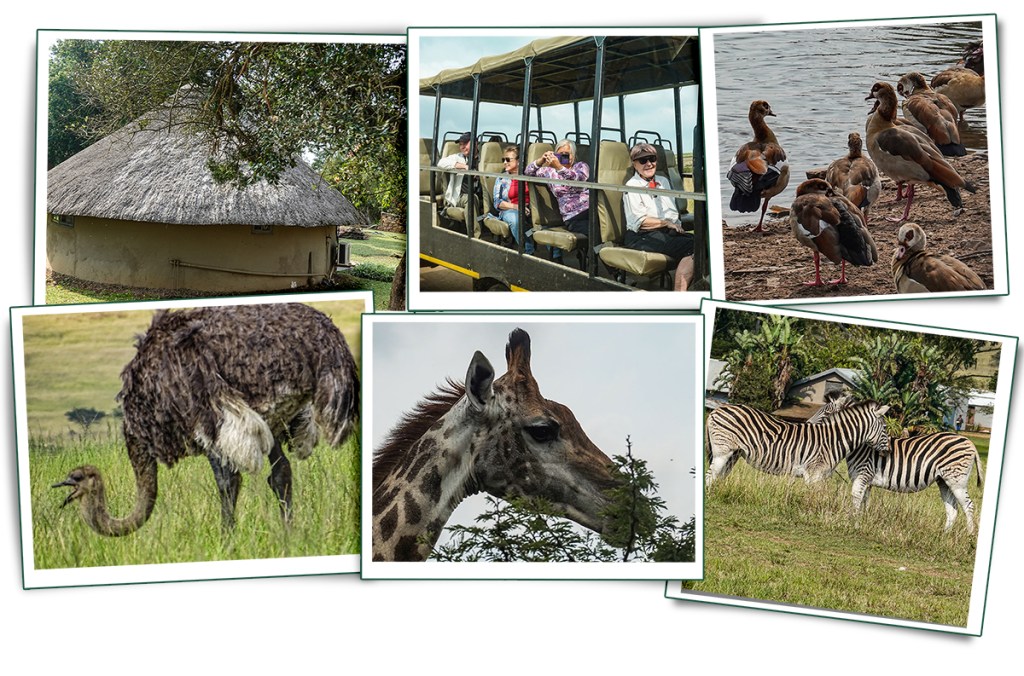
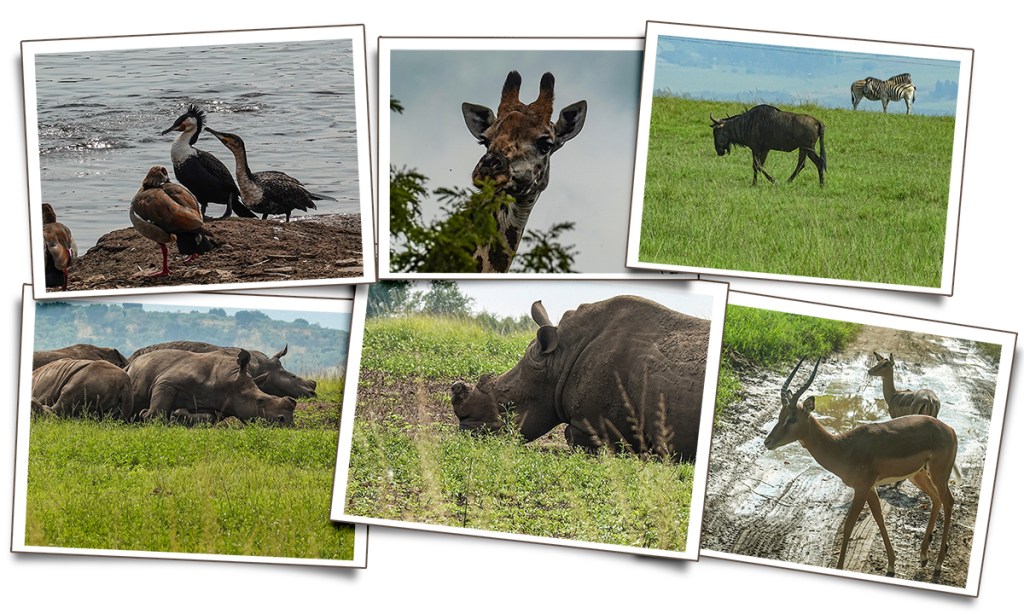
As we entered Tala Game Preserve, we noticed that the animals and the people shared a common space. There were no lions at Tala so the co-habitation of the animals and humans worked for them. Our Tala guide was also the manager. He told us he visits other game preserves on his vacations. As you can see from the photos, the safari vehicles were open. The ride was bumpy and a bit dusty but oh the sights were amazing.
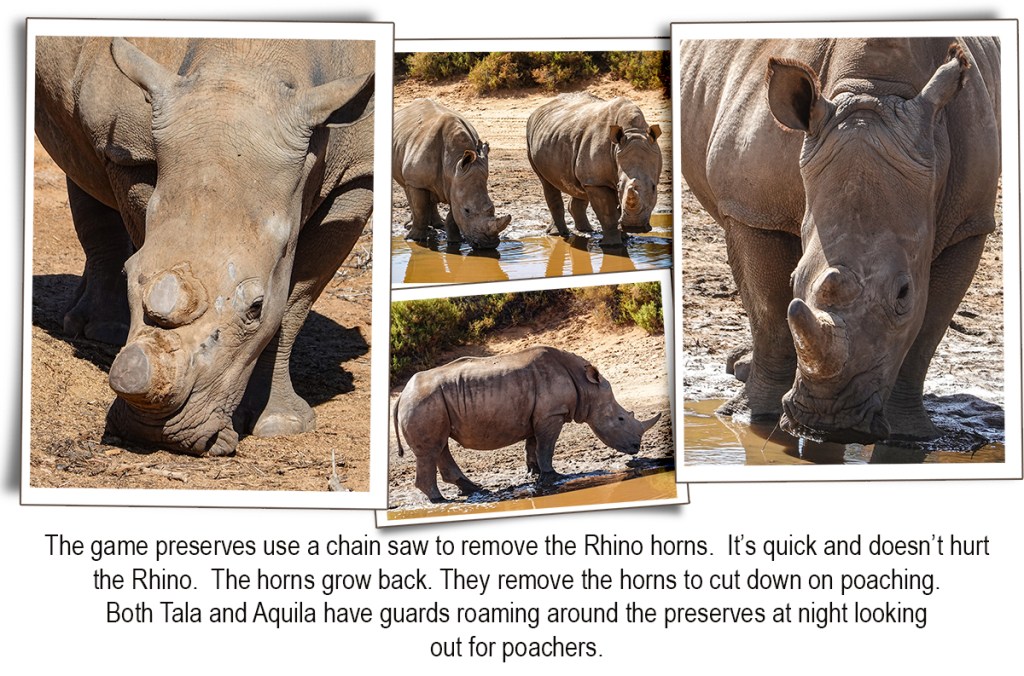
Tala was where we first learned about the Rhino Protection Program. Rhinos have been mercilessly hunted over the years almost to extinction. The protection program involves removing the horns because that is the only part of the Rhino sold on the black market. The process is to tranquilize the Rhino and use a chainsaw to remove the horn. It is quick and painless. The horn will grow back. In addition, each game preserve has guards that patrol nightly to ward off poachers.
Aquila Game Preserve, Touws River, South Africa
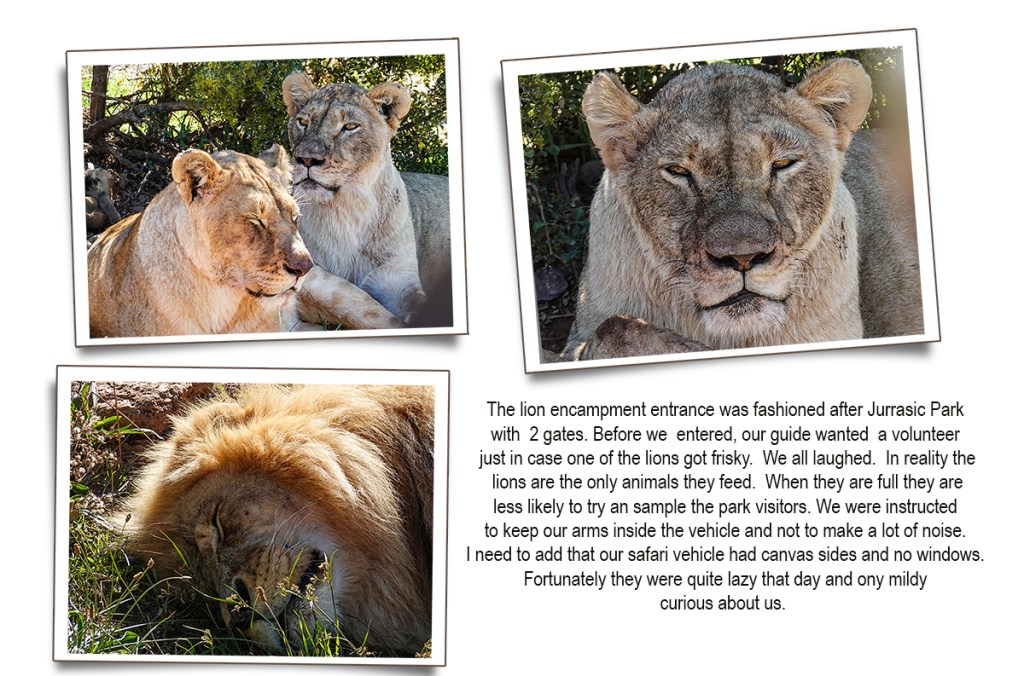
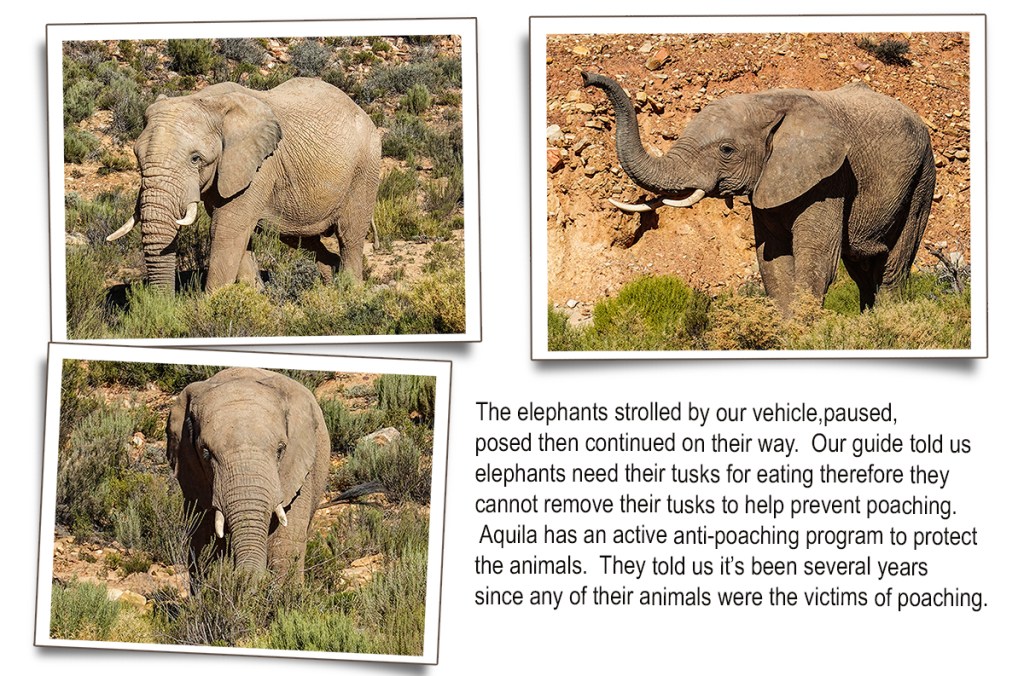
We were up before the alarm rang. We were so excited. You might be thinking we just saw big game animals a few days earlier. Correct! Aquila was a larger game preserve and it had lions.
Capetown was fogged in and we were slightly worried about the weather at the preserve. As we drove out of Capetown, the weather cleared and blue skies followed us to the preserve. We arrived in time for the buffet lunch. Delicious food. Now we were anxious to get on the safari. The vehicles had soft sides but still open air for spectacular viewing.
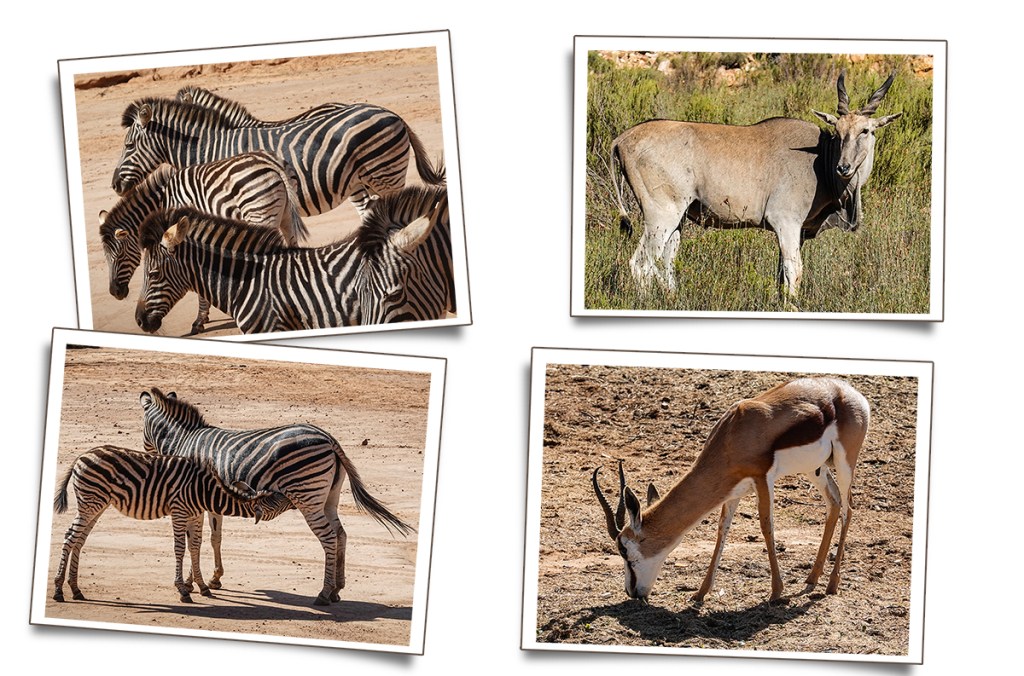
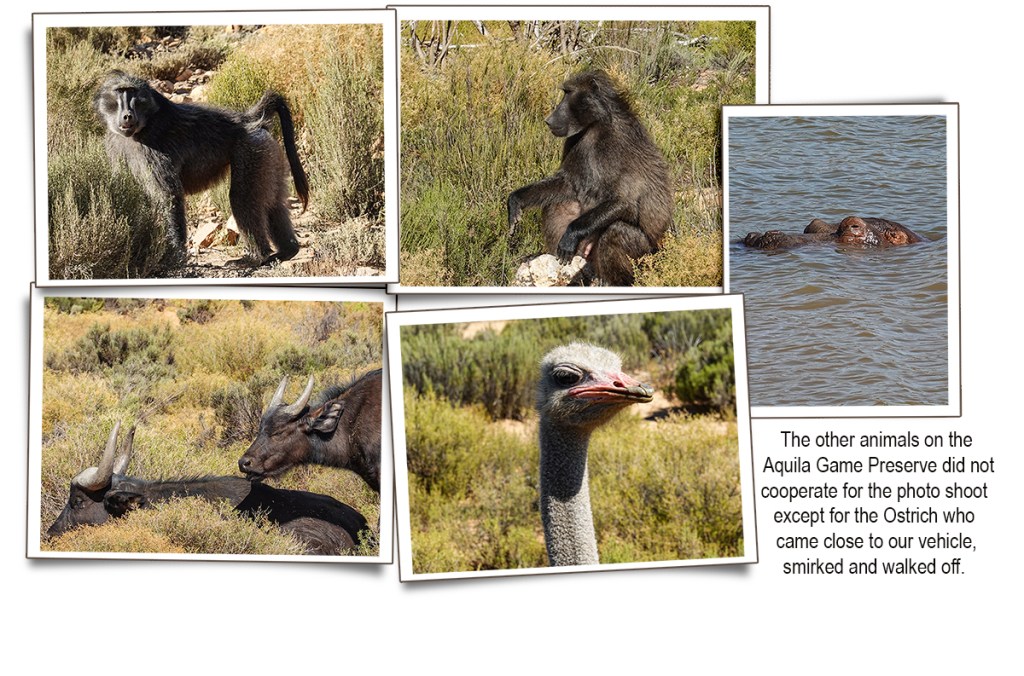
Our vehicle traversed the landscape along the bumpy gravel and dirt roads. When we saw a different species we shouted out to the driver. He did the same making this safari even more exciting. We stopped shouting when we entered the lion encampment. As you can see from the photos, we got pretty closed to most of the animals. Another great day!
The Wild Horses of the Namib
The Garub Hide
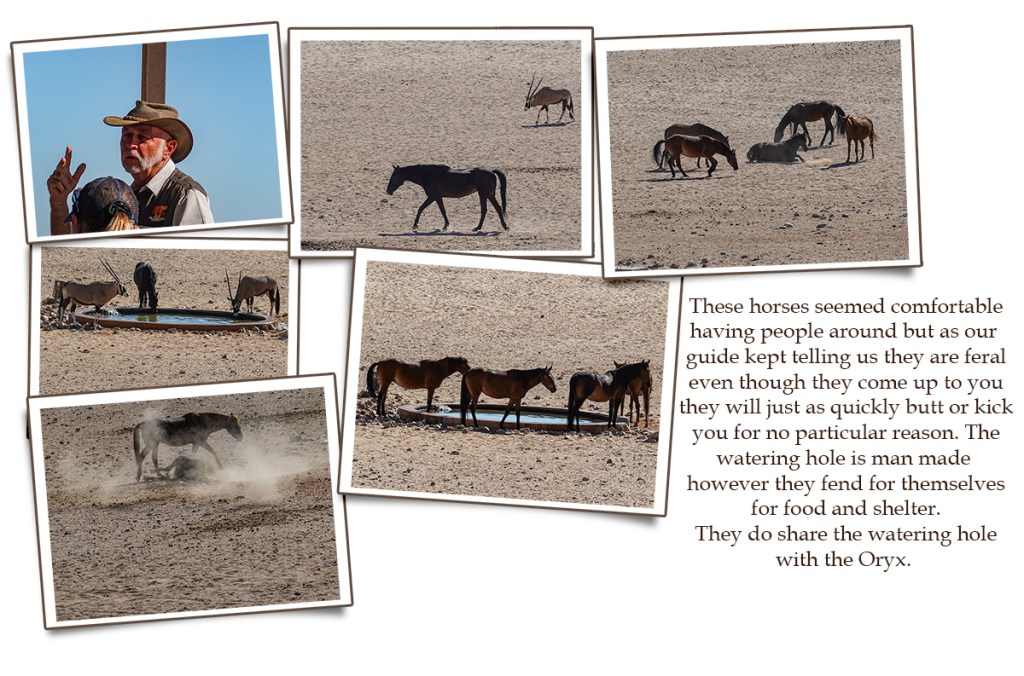
How did these horses come to be feral in this desolate country? The first thing you need to know is that Namibia was colonized by the Germans prior to WWI. In fact, Namibia still retains a lot of the German culture to this day. I’ll write more about that in another blog. The horses were part of a breeding horse farm when WWI broke out. During WWI, many Germans left to fight in the war. The horses were abandoned. They learned to survive as well as thrive in the harsh desert landscapes for many decades.
So why is the herd down from an estimated several hundred to less than 80 today? The local guide cited several reasons. The first one is the nature of man to control the environment. When they set aside the Garub National Park, the government put up fences to outline the area of the park. Fences restricted the movements of the horses and other animals such as hyenas.
The second reason was again attributed to the governmental policy of not being able to relocate the hyenas. Food supply was limited in the desert so the hyenas went after the most vulnerable of the horses, the foals.
Another reason was the years of drought that limited the available food and water for all species in the park. A foundation was established to assist the horses. The funding helped to pay for a permanent water hole. Additionally, the foundation planted a hardy grass that provided nutrients for the horses. Since the Garub Hide was also a tourist destination, CNN televised a special regarding their plight. That special was viewed on YouTube adding more attention to the issue. In response, more funding was directed toward the preservation of the horses. The governmental policy regarding the hyenas was also modified to allow for their relocation to another area.
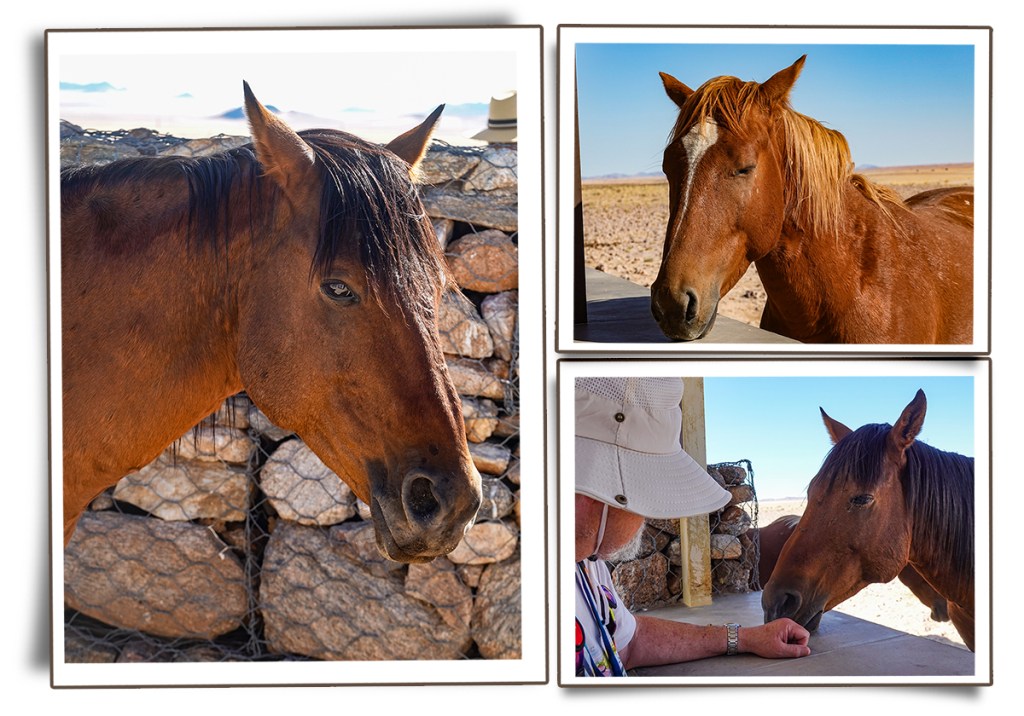
The horse came up to the hide. I think they were as curious about us as we were about them. One came over to sniff Steve’s hand.
 Two seniors traveling the world
Love that you got to go on safari’s, I find it all so amazing, to see a girafe head pop up out and over the bush, aha, still makes me smile to think of it! The animals are all so fascinating. Sharon Russell
LikeLike